
Compare Keno on its rules, not its label
 Available in US
Online Keno games can differ in draw frequency, rules and paytables, so each game's information matters when assessing how it works.

Free Online Keno: What the Games Actually Offer
Free play and a game’s underlying rules are separate things. A free mode, where a particular game offers one, concerns whether a stake is placed; it does not by itself describe how that game draws numbers, calculates prizes or presents its paytable. Those details belong to the individual game. Treating “free Keno” as a single standard format can therefore obscure differences that matter when comparing games.
A specialist review reports that online Keno versions can vary in draw frequency, rules and paytables. That is a reason to examine the terms attached to a particular game rather than assume that one title represents every online version. The name or broad category alone does not establish the mechanics or return characteristics. A game may use familiar Keno imagery while applying its own rules, so the game information is more useful than a general label.
Free casino Keno games online, when available, can provide a way to become familiar with a game’s layout and controls without placing a real-money stake. That is a limited form of familiarisation, not evidence about the financial results of real-money play. A free mode may not reproduce every condition that applies when a stake is involved, and the presence of a demo does not establish that the same game is available for real-money play at any particular casino. Availability and the relationship between modes need to be checked in the game and operator information.
The distinction matters for people comparing an online casino with Keno or looking for several versions in one place. A casino’s general description does not establish which Keno titles it carries, whether a free mode is available, or whether the rules of one title match another. Nor does a reference to four-card Keno, for instance, establish the number of cards supported, the paytable or the terms that apply. Those are features of a specific game, not consequences of the phrase used to describe it.
 Best Live Casinos in New Zealand: Rules and PlayLearn about live dealer games, table rules, Bitcoin payments and withdrawals. New Zealand’s 2026 Act established its first domestic online-casino licensing
 Roulette for New Zealanders: Bets, Odds and RulesLearn how inside and outside bets differ, how wheel layouts shape wagers, and what odds, variants, apps and betting systems can—and cannot—tell…
RTP is another game-specific characteristic that needs careful interpretation. It is a theoretical long-run figure associated with a game’s rules and paytable. It is not a forecast of what a player will receive in one session, and it does not promise a particular outcome. A short run of results can differ from the theoretical figure; the figure describes an expectation across repeated play over the long term, not a session-level guarantee.
This limits what RTP can establish when comparing free and real-money versions. If a game displays an RTP, the figure should be read in relation to the particular game and paytable it describes. It should not be treated as proof that a free mode has the same settings as real-money play unless the game information expressly connects them. Likewise, a displayed theoretical return cannot establish that a session will return that proportion of the stake. It is a characteristic of the model, not a promise about an individual result.

The same caution applies to broad searches for the best online Keno casino. A general ranking cannot settle whether a particular Keno game suits a player’s purpose unless the comparison identifies the actual titles and their rules. For someone interested in free play, the relevant questions are whether a free mode exists for the named game and what that mode permits. For real-money play, game rules, paytable and any published RTP are separate details to assess. None can be inferred reliably from a casino’s broad Keno label.
Terms such as “real online casino Keno” or “free online casino Keno games” also describe different aspects of access and play. “Free” concerns whether a stake is being risked in the mode being used; “real-money” concerns wagering with money. Neither phrase, by itself, supplies a game’s rules or theoretical return. A player comparing games needs to keep these categories distinct rather than treat them as interchangeable descriptions of quality.
No single format should be assumed across online Keno. An individual title’s description and paytable provide the relevant basis for understanding its stated rules and return characteristics. Where the game offers free play, that mode may help explain how its interface works, but it should not be taken as a prediction of real-money outcomes. Where RTP is published, it remains a long-run theoretical measure, not a session promise.
How Keno Draws, Spot Choices and Payouts Work
Keno combines a selection of numbers, a stake and a draw. In a common format, the playing grid contains 80 numbers and the draw produces 20 results. A player marks a set of numbers, known as spots, before the draw. Once the results are available, the selected spots are compared with the numbers drawn.
The prize is not determined simply by whether there is a match. It depends on how many selected spots match and on the game’s paytable. That table sets out which match outcomes qualify for a return and what each qualifying outcome pays for the chosen stake. Two games can therefore treat the same number of matches differently if their paytables differ.
From selection to result
A Keno ticket records the selected spots and the stake assigned to the play. The draw then creates a result against which that selection is assessed. The key comparison is between the player’s chosen numbers and the drawn numbers: the matches form the outcome used by the paytable.
This process separates the draw from the payout calculation. The draw determines which numbers appear; the paytable determines how the resulting match count translates into a prize. A match count alone does not show the value of a prize, and a particular selection does not carry a fixed return irrespective of the game’s rules.
 Roulette Casinos in NZ: Tables, Odds and RulesCompare roulette formats and casino options in New Zealand, with explanations of wheel layouts, bet types, payouts, live tables and responsible limits.
 Blackjack Sites in New Zealand: Rules and LicensingExplore licensing, game rules, live and software-shuffled tables, payments and payouts, including how DIA oversight differs from the Commission’s licensing role.
The number of spots selected also matters because the paytable is organised around combinations of selected spots and matches. A table may include several possible match outcomes for a given selection, while other outcomes may return nothing. The precise entries must be read from the rules for the game being played rather than assumed from the general Keno format.
Reading a paytable
A paytable is the reference for interpreting the result. It should be read alongside the rules that define the game’s grid, the permitted selection and the stake. The relevant row or category corresponds to the selection made; the result is then assessed by the number of those spots that appeared in the draw. The stated prize is the amount associated with that outcome under the table.
The distinction between stake and prize is important. A paytable may express returns in a way tied to the amount wagered, or it may display a prize according to the game’s own presentation. The rules explain how the listed figure applies. Without those terms, a prize entry cannot safely be interpreted as a guaranteed amount for every ticket or every version of Keno.
A result with more matches may look stronger than one with fewer, but the prize still depends on the specific paytable. The table, not an informal assumption about what a match “should” be worth, defines the game’s settlement. This is why the same draw outcome can produce different prizes in different casino Keno games.
Keno Payout Process
-
1
Selection
A player marks a set of numbers (spots) and assigns a stake to the ticket.
-
2
The Draw
The game produces 20 results from a grid of 80 numbers.
-
3
Comparison
The selected spots are compared with the drawn numbers to determine the match count.
-
4
Payout Calculation
The match count is applied to the game's specific paytable to determine the prize.
What the common format does not establish
The 80-number grid and 20-number draw describe a common Keno form, not every game labelled Keno. The format alone does not specify how many spots may be selected, which match outcomes are paid, or the value assigned to them. Those details belong to the individual game’s rules and paytable.
Nor does the basic draw structure determine whether a particular selection is likely to produce a prize of a given size. It only describes how numbers are selected and how the comparison is made. To understand a casino Keno game, the draw format and the payout table have to be considered together: one defines the result, while the other assigns a prize to the matching outcome.
This framework applies whether a game is presented as a traditional draw or as an online Keno title. In either case, the central calculation is the relationship between chosen spots, drawn numbers and the applicable paytable. The label “Keno” does not, by itself, establish identical rules or payouts across games.
Assessing Keno Casinos in New Zealand
Choosing a keno casino in New Zealand is easier when you can check what is known about each option. Use these brief verdicts as a starting point for your own review.
-
Zotabet
- License
- 07017519840
- Payout speed
- 1-3 business days
Zotabet lists licence number 07017519840. Its stated payout speed is 1–3 business days.
-
BitStarz
- License
- Curaçao Gaming Authority, licence no. OGL/2024/165/0185
BitStarz lists a Curaçao Gaming Authority licence, number OGL/2024/165/0185.
-
Neospin
- License
- Tobique Gaming Commission, licence no. 0000064
Neospin lists a Tobique Gaming Commission licence, number 0000064.
-
Lamabet
- Payout speed
- 1-3 business days
Lamabet states a payout speed of 1–3 business days.
-
N1 Casino
- License
- Malta Gaming Authority, licence no. MGA/B2C/394/2017
N1 Casino lists a Malta Gaming Authority licence, number MGA/B2C/394/2017.
-
Wintino
- Payout speed
- 1-3 business days
Wintino states a payout speed of 1–3 business days.
-
7Bit Casino
- License
- Tobique Gaming Commission, licence no. 0000091
7Bit Casino lists a Tobique Gaming Commission licence, number 0000091.
-
Ricky Casino
- License
- Tobique Gaming Commission, licence no. 0000002
Ricky Casino lists a Tobique Gaming Commission licence, number 0000002.
-
Play Grand
- License
- Malta Gaming Authority, licence no. MGA/B2C/370/2017
Play Grand lists a Malta Gaming Authority licence, number MGA/B2C/370/2017.
A sound assessment of Keno casinos in New Zealand has to separate the quality of a game from the legal position of the service offering it. Game titles and presentation alone do not establish whether an operator is authorised to serve customers in the country. Nor is there a substantiated basis for naming particular providers as the best choice for Keno access from New Zealand. A comparison should therefore focus on verifiable regulatory status and clearly stated terms, rather than unsupported rankings.
The legal framework is in transition. The Online Casino Gambling Act 2026 took effect on 1 May 2026 and created New Zealand’s first domestic licensing system for online casino gambling. Until then, online casinos operating from overseas were not licensed or supervised by a New Zealand regulator. Customers who wagered with offshore websites during that period had no domestic government recourse.
The Act also sets out an interim period from 1 May to 1 December 2026. Casinos that were already providing online services to people in New Zealand before the Act began may continue during that window, subject to its transitional provisions. This temporary permission should not be confused with a full domestic licence. The complete licensing regime is not expected to be operational until 2027, while unlicensed operation is expected to become an offence around mid-2027. A specialist market review has described the licensing process as underway; the legal milestones indicate why transitional status and full licensing are distinct matters.

Responsibility is divided between two public bodies. The Department of Internal Affairs is New Zealand’s primary gambling regulator and oversees regulation of the online casino licensing framework. The Gambling Commission hears and determines casino licensing applications. It is also responsible for issuing online casino licences and approving changes to licence conditions. These roles are related but not interchangeable: oversight of the framework sits with the Department, while application decisions and licence conditions fall to the Commission.
For a practical assessment, the operator’s identity and current regulatory position are central. The transition means that a business’s ability to continue operating temporarily is not, by itself, evidence that it holds a domestic licence. Regulatory status should be considered alongside the operator’s published terms, including restrictions that affect Keno, payment conditions and any conditions attached to promotions. A claim about licensing should be checked against current information from the relevant New Zealand authorities, rather than inferred from a site’s branding or from the presence of a game.
Other considerations can help describe a Keno service, but they do not substitute for checking its legal position. A clear account of a game’s rules and paytable, for instance, may help explain what is being offered; it does not establish that the provider is licensed. Equally, a familiar name or polished interface does not demonstrate regulatory approval. Keeping these questions separate makes comparisons more reliable and avoids treating marketing language as regulatory evidence.
The developing regime also means that statements about the market can become outdated. A service operating under transitional provisions may have a different status from one holding a licence once the full regime is active. Any assessment should be tied to the date on which the relevant regulatory information is checked, and should distinguish temporary permission from a licence issued under the new system. This distinction is particularly important when interpreting claims that a Keno casino is “regulated” without identifying the regulator or the legal basis for that description.
These limits do not prevent comparison; they define what a defensible comparison can establish. The relevant questions are whether the operator can be identified, what its current New Zealand status is, and whether its rules and commercial conditions are transparent. Until provider-level information supports a more specific conclusion, a named “best” choice would imply a level of certainty that the available regulatory framework does not justify.
Online Keno Rules, Results and Game Features
Online Keno does not have a single rule set or payout table. Specialist reviews describe differences between versions, so results from one game cannot automatically be interpreted using another game’s rules. The displayed result may show how many selected spots matched, but the prize depends on the paytable attached to that particular version.

Before a game begins, its rules should make clear how selections are made, which outcomes qualify for a prize and how payouts are calculated. The number of selectable spots, draw size, stake limits and prize tiers can differ between games, as can the relationship between matches and returns. A familiar-looking grid is therefore not evidence that two games use identical rules. The game’s own information is the relevant reference for interpreting its result.
Reading results and paytables
An online Keno result is meaningful only alongside the game’s stated rules and paytable. A result display may report matches, but the number of matches alone does not establish the amount won: the relevant prize tier and any applicable feature also matter. A paytable should be checked for the outcomes it covers and the payout attached to each one. If the rules or payout information are unclear, the result cannot be assessed reliably from the display alone.

Some games publish a return-to-player, or RTP, figure. This is a theoretical long-run value calculated for a particular paytable, not a forecast of what an individual session will return. It does not determine the outcome of a specific draw, nor does it make a short run of results representative of the stated figure. Comparisons between published RTP values are meaningful only when the figures refer to the games’ relevant paytables; the number should not be treated as a promise.
Optional features can change the terms
Specialist reviews describe optional features in some versions, including quick picks, multipliers, faster draws and jackpots. Their presence and terms are game-specific. A quick pick changes how spots are selected, while a faster draw changes the pace of play. A multiplier or jackpot can affect potential payout and may also alter the cost or conditions of a play. These labels alone do not establish how a feature works.
The practical check is the game’s explanation before a stake is confirmed. It should show whether a feature is optional, how it affects the stake, and how it changes eligible outcomes or payouts. Where a multiplier or side feature is selected, the total cost should be clear before confirmation. A larger advertised prize does not, by itself, show the likelihood of receiving it or the effect on the game’s overall return.
Tournaments and game labels
A tournament is a separate format from an individual game’s draw and paytable. Its ranking method, entry conditions and prize rules would need to be set out separately from the underlying Keno rules. Specialist reviews do not establish which online casinos offer Keno tournaments to players in New Zealand, so availability should not be inferred from a game description or promotional label.
The phrase “Keno slots” can also be used loosely to describe Keno-style games presented within a casino’s game collection. The label does not establish a shared set of rules, a particular payout structure or a connection to a specific tournament. Each game’s own information remains necessary to identify how it operates.
For any version, the useful comparison is between its rules, paytable and optional features—not simply its title or visual design. Results are interpretable only under the terms of the game that produced them, and published RTP remains a long-run theoretical measure rather than a session-level assurance.

Bitcoin and Keno: What Can Be Verified
Bitcoin payment support and Keno availability are separate questions. A casino may describe a cryptocurrency option without identifying Keno among its games, or list Keno without stating that Bitcoin can be used to fund play. Published operator terms do not establish which services accessible to people in New Zealand offer both. Accordingly, a claim that a particular bitcoin casino with Keno is available to New Zealand players requires current, operator-specific evidence.
The relevant details would need to be confirmed together: whether Keno is offered, whether Bitcoin is accepted for deposits and withdrawals, and whether those terms apply to customers in New Zealand. A general reference to cryptocurrency or a game catalogue alone cannot establish all of these points. Payment methods and game access can be subject to separate terms, so one should not be inferred from the other.
This uncertainty about Bitcoin payments is distinct from the country’s licensing position. The Online Casino Gambling Act 2026 took effect on 1 May 2026 and established a transitional period through 1 December 2026. During that transition, services already provided to people in New Zealand before the Act took effect may continue, subject to its transitional provisions. The full licensed regime is not expected to be operational until 2027. These rules describe the development of domestic oversight; they do not verify a casino’s Bitcoin payment options or confirm that it offers Keno.
The Gambling Commission handles casino licensing applications and licence decisions, while the Department of Internal Affairs oversees the online casino licensing framework and remains New Zealand’s primary gambling regulator. That division of responsibilities concerns regulation, not the payment methods available at any individual service. A Bitcoin logo, wallet reference or general payment page should therefore not be treated as evidence of a New Zealand licence, nor as confirmation that Keno can be played using Bitcoin.
- Confirm Keno is offered by the operator
- Verify Bitcoin is accepted for deposits and withdrawals
- Check if these terms apply specifically to New Zealand customers
- Review the operator's current New Zealand regulatory status
For real-money play, the relevant checks are the operator’s identity, licence details, game availability and payment terms. Those details need to be current and specific to New Zealand; broad statements about cryptocurrency or Keno are not enough to establish that both are supported. Until operator terms provide that confirmation, the availability of Bitcoin-funded Keno for New Zealand players remains unsubstantiated.
Playing Keno Online Without a Download
“No download” describes a way of accessing a game, not a particular type of Keno. It may refer to opening a game in a web browser rather than installing software, but that label alone does not establish which Keno titles are available to New Zealand players or how they run.
The distinction matters because the access method does not define the game itself. A specialist review reports differences between Keno games in selectable spots, draw size, stake limits and payouts. A browser-accessible title, if offered, would still need to be assessed on its own rules and terms; the absence of an installation step would not show that its format, costs or prizes match another game.
The phrase “free online Keno” can also describe more than one arrangement. Free play may mean trying a game without staking real money, while “no download” concerns how it is accessed. Neither phrase, by itself, confirms that a title is free, that it can be played in a browser, or that it is offered by a particular casino. Those details require clear information about the specific game and its access conditions.

The wording “Keno at a station casino” does not resolve the issue either. A reference to a station or casino setting is not evidence that a particular online game is available there, or that it can be played without installing software. Such claims should be tied to identifiable, current details about the game and its delivery rather than inferred from a broad label.
Where a game is described as browser-based, the relevant information is its own access guidance and rules. Where no such details are published, it is not possible to verify the access method from the game’s name alone. The same caution applies to claims about free access: the game’s terms need to distinguish a demonstration mode from real-money play.
For a comparison of Keno options, access method is therefore only one narrow point. It does not establish whether the game suits a particular device, whether it has the desired format, or what its terms allow. Those points should be treated separately and verified for the specific title, rather than assumed from “no download” wording.
Real-Money Keno and Claiming Winnings
Real-money Keno differs from free play because a stake is placed and any prize is tied to that play. Free games may let players explore a format without wagering, but their results do not establish what a real-money session will return. The distinction matters when comparing online casino gambling with no-stake play: the rules and prize conditions attached to the particular game determine what a result means.
A Keno prize is not simply a matter of seeing a favourable result on screen. For traditional play, a specialist review reports that winnings must be claimed within 12 months of the draw date. That timeframe is relevant to anyone holding a winning ticket, but the report should not be treated as a universal deadline for every online Keno game. Online versions may set their own rules for how winnings are credited or claimed, so the applicable terms need to be read for the game and service involved.
Traditional ticket holders should keep the ticket and draw details until the claim has been resolved. For online play, records of the relevant game and account activity can help establish what occurred if a balance or result is disputed. These are practical record-keeping measures, not a substitute for the conditions governing a particular prize.
The distinction between a displayed balance and a claimable prize is also important. A game may show a result, while the steps for receiving or withdrawing funds are governed separately by its terms. Those conditions should be understood before real-money play begins, rather than inferred from the appearance of a winning screen. No general timeframe for online Keno claims can be applied on the basis of the traditional claim period alone.
The same care applies when comparing Keno games at online casinos or station casinos. The label “Keno” does not establish that the games use identical prize procedures, and the traditional claim period should not be assumed to cover every format. For any real-money game, the relevant questions concern the applicable claim process, what records are needed, and whether a stated deadline is attached to that specific game or ticket.

The available distinction is therefore narrow but consequential: a reported 12-month claim period applies to traditional Keno winnings, while online prize conditions must be assessed under the individual game’s terms. Free play, meanwhile, does not involve a real-money prize claim.
How to Play a Traditional Keno Draw
Traditional Keno in New Zealand follows a scheduled draw rather than the faster, game-specific rhythms found in some online versions. The daily draws take place at 10 am, 1 pm, 3 pm and 6 pm NZST. A traditional draw selects 20 balls from a pool of 80.
To enter, a player chooses numbers, also called spots, and places a stake. The selection can be made manually or left to a random choice known as a dip. A manual selection allows the player to mark the numbers they want; a dip fills the selection randomly. Neither method changes how the draw is conducted: the result comes from the balls selected in the draw.
The basic sequence is therefore straightforward: decide on a selection method, choose the spots if selecting manually, set the stake, and compare the selection with the drawn numbers after the result is available. A Keno prize depends on the matches and the applicable game paytable, so the relevant rules should be understood before a stake is placed. This describes the traditional draw format; online Keno games can use different schedules or rules.
For a traditional New Zealand draw, the published times provide a practical reference for when results are determined. They should not be assumed to apply to every online game labelled Keno, since online versions may operate on different draw schedules. The distinction matters when a player is comparing a scheduled draw with a digital game that may present results on a different cycle.
Do
- Set a spending and time limit in advance
- Choose a stake that fits a budget that can be lost
- Review the selection and stake before confirming
Don't
- Chase losses based on previous results
- Assume number patterns influence the random draw
- Use a number generator to forecast the result
The choice between a dip and manual selection concerns how the spots are picked, not the structure of the draw. In either case, the entry is assessed against the same draw result for that game. A stake should be set before play and kept within an affordable spending limit. Reviewing the selection and stake before confirming an entry helps ensure that the intended choices have been recorded.
Keno Strategy and the Limits of Number Selection
Number selection can shape a Keno ticket, but it cannot control the result of an independent random draw. A pattern, a lucky-number routine or a set based on earlier results does not make the chosen numbers more likely to appear next time. Each draw is separate from those that came before it.
This distinction matters when considering casino Keno strategy. A player may prefer dates, repeated patterns or numbers selected at random, but those are different ways of making a choice, not methods for changing the underlying probability. A previous result offers no predictive signal for the next independent draw. Numbers that have appeared often are not thereby due to appear again, and numbers absent from recent results are not owed a turn.
A number generator has a narrower role: it chooses spots for convenience. It does not forecast the draw or improve the chance that the selected spots will match. Manual selection and a generated selection therefore differ in how the ticket is made, not in their power to influence a random result.
The same limit applies to free casino Keno. Free play can allow a person to make selections without staking money, but it does not turn number patterns or past outcomes into a predictive strategy. Results from free play should not be treated as evidence that a particular sequence will be more successful in later draws.
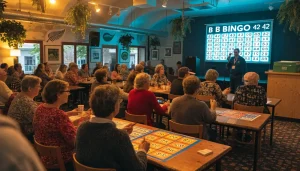
A strategy can still help organise play, provided it is not mistaken for an odds advantage. A consistent selection method may reduce indecision; it cannot make an independent draw favour those numbers. Any approach that depends on recovering losses by changing selections rests on the same mistaken assumption that previous outcomes affect the next result.
For real-money play, the relevant safeguards concern spending rather than prediction: set a spending and time limit in advance, choose a stake that fits a budget that can be lost, and do not chase losses. These measures do not change Keno probabilities. They keep decisions within defined boundaries while the draw remains uncertain.
Keno Bonuses and Mobile Play: Terms to Check
A casino Keno bonus is not risk-free cash. Its value depends on the conditions attached to it, including eligibility, wagering requirements, expiry, game contribution and any maximum withdrawal. A specialist review describes these terms as varying between offers, so a headline bonus alone does not establish how Keno play will count.

Game contribution is especially relevant: bonus terms may restrict how much Keno wagering contributes towards a wagering requirement. The wording should be checked before accepting an offer, alongside any excluded games and conditions that apply to winnings. If Keno is not listed as eligible, or its contribution is unclear, the bonus should not be assumed to apply to Keno play.
Mobile use does not change the need to assess the offer’s written conditions. A promotion displayed on a phone should be checked against its full terms; the format in which an offer appears does not establish that Keno wagers qualify. Nor should a mobile label be taken as proof that a particular Keno feature or bonus is available.
Before real-money play, check the operator’s identity, licence details, bonus restrictions and payment terms. Confirm whether Keno is eligible, how its wagers count, when the offer expires and whether a withdrawal cap applies. Set a spending and time limit in advance, choose a stake that fits a budget that can be lost, and do not chase losses.
Can you play Keno online?
Yes, online Keno games are available, though their rules, draw frequency and paytables can differ.
How often are Keno NZ draws held?
Traditional Keno in New Zealand has four draws daily, at 10 am, 1 pm, 3 pm and 6 pm NZST.
Are Keno bonuses available to all NZ players?
No, bonus eligibility can vary. Check the bonus terms for eligibility, wagering requirements, Keno game contribution, expiry and maximum withdrawal.
Are there any strategies for playing Keno?
You can choose numbers manually or use a random dip, but neither improves the odds of a random draw.
Does a strategy change the draw?
No, the draw is independent of the numbers you choose and previous results.
Can a Keno strategy guarantee a win?
No, a strategy cannot guarantee a win; prizes depend on the matches and the game’s paytable.
Casino Games in New Zealand: Roulette, Blackjack & More
Content created by the «casinopaymentadvisernz.com» team