
Understand the Wheel Before You Place a Bet
 Available in US
See how the European roulette wheel, bet types, payouts and free-play mode work, and what betting systems can—and cannot—change.

European Roulette Online: Free Games and Real-Money Play
An online European Roulette game can be played without staking money or with real-money bets. The basic roulette format is shared: a ball lands in one of the wheel’s numbered pockets, and the result determines whether a bet wins. On a European wheel there are 37 pockets, including a single zero. The game’s standard house edge is 2.70%, meaning the rules give the casino a mathematical advantage over time; it does not predict the result of an individual spin.
The distinction between a free game and real-money play concerns what is staked and what can be won, not a different underlying wheel. A free European Roulette game online lets a player interact with the game without placing a cash wager. In real-money play, funds are risked and a winning bet may produce a monetary return according to the game’s stated rules. In either mode, the visual presentation can include a wheel, a table layout and controls for placing bets, although the interface and available features depend on the particular game.
What free play is for
A free European Roulette game is principally a way to become familiar with the interface. It can show how the wheel and table are presented, where controls appear, and how the software displays a result. This may be useful before real-money play because it allows the game’s basic presentation to be explored without risking a stake.
Free play does not, by itself, establish that a later real-money session will have the same conditions in every respect. A game may offer different settings or display features across its free and paid modes, so the rules shown within the specific version matter. The presence of a free mode also does not imply that winnings from it can be withdrawn: without a real-money wager, displayed credits are part of the game experience rather than cash proceeds.
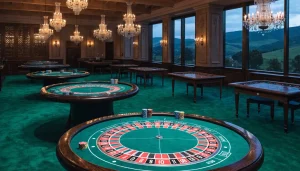
An online European Roulette simulator may reproduce the wheel and betting interface in a simplified form, while a casino game may add animation, sound or other presentation features. Those differences affect how the game looks and feels, not the basic meaning of roulette’s outcome. Free play can help with orientation, but it should not be mistaken for a separate form of roulette with a different mathematical advantage.
What changes with real-money play
The practical difference is financial exposure. A real-money bet can lose, and the house edge remains part of the game’s structure. The single-zero wheel does not become more favourable because a session is played online, and a free version does not provide a means of turning later outcomes into reliable income. No online roulette cheat or method can guarantee a win on every spin.
Before staking money, the relevant information is the game’s rules and the terms attached to the account or funds being used. These conditions may affect how a balance can be played or withdrawn, but they do not alter the wheel’s pockets. Free play avoids wagering funds; real-money play does not. That difference is more consequential than whether the screen uses realistic animation or a simplified digital display.
Choosing between the formats
The choice depends on the purpose of play. Free mode suits familiarisation with the game’s controls and appearance. Real-money mode adds financial risk and the possibility of a monetary return, but it does not make outcomes more predictable. Treating free play as rehearsal for a guaranteed result would confuse learning the interface with learning how future spins will fall.
European Roulette is one specific wheel format. Its single zero is part of the reason it has a lower house edge than versions with an additional zero, but detailed comparisons between variants are a separate matter. For this game, the essential distinction between free and paid play remains straightforward: the wheel format may be shared, while the stake and financial consequences are not. Any real-money play carries the possibility of loss, so no more should be risked than can be afforded to lose.
What Free European Roulette Can and Cannot Show
A free European Roulette game can make the rhythm of a session easier to follow without placing money at stake. It can show how a particular game presents its wheel, spin animation and result history, and how its controls respond to selections. That is practical familiarity with the software, not evidence about what a later spin will produce.
The value of free play depends on what is being examined. A player unfamiliar with an online interface can use it to see where information appears and how the game signals that a spin has ended. A no-download version may also make it possible to inspect a game in a browser rather than installing software. These observations concern access and presentation; they do not establish how an unrelated game or live table will behave.
Practice can also help separate the visual sequence of a spin from the interpretation of its result. A result history, for instance, records what has already occurred in that session. It may be useful for reviewing the display or checking that a selected option was registered. It does not provide a forecast. A run of similar results can look meaningful when viewed together, but its appearance does not make the next result more predictable.
The key limitation is that roulette spins are independent. Previous results do not change the probability of outcomes on subsequent spins. A free European Roulette game therefore cannot reveal a pattern that reliably predicts future results, even if a sequence seems to repeat or cluster. The same applies to a long practice session: more observations may produce a larger record, but they do not turn past outcomes into information about the next spin.

A simulation can demonstrate how the particular game represents results, but its display should not be treated as a test of future performance. Results from a free session describe that session. They cannot show that a later real-money session will reproduce its sequence, or that a strategy appearing successful in practice will remain successful when money is involved. A short run can look favourable by chance; another can look unfavourable. Neither outcome establishes a durable expectation.
The distinction matters when practice is used to evaluate a claim. If a method appears to work during a free session, that observation alone does not show that the method caused the results. The same sequence could occur without the method, and a different sequence could follow when the session is repeated. Since each spin is independent, a result history cannot confirm a system for predicting what comes next.
Free play is also limited as a substitute for real-money experience. It can familiarise someone with the game’s presentation, but it does not reproduce the financial consequence of placing a real bet. A practice session may therefore help with basic recognition while leaving the decisions and pressures associated with risking money untested. This is not a defect in the practice mode; it is a boundary on what the mode can establish.
The phrase “free spins” can refer to different features, so it should not automatically be read as a prediction tool or as proof that a game is free of conditions. A free-play game and a promotional offer are not necessarily the same thing. The relevant terms depend on the feature being offered, and a game’s practice results do not establish the terms of a separate promotion.
The soundest use of free European Roulette is narrow: observe how a chosen game is presented, become familiar with its controls, and treat recorded results as past events only. It cannot reduce the uncertainty of later spins or provide a dependable basis for predicting them. In real-money play, every bet can lose, and no one should risk more than they can afford to lose.
European and American Roulette: The Wheel and the House Edge
The main difference between European and American Roulette is the wheel’s pocket layout. European Roulette has 37 pockets: numbered pockets from 1 to 36 and a single zero. American Roulette has 38, with the same numbered pockets plus both a single zero and a double zero. That extra pocket changes the probability of outcomes and raises the house edge.
The house edge expresses the casino’s mathematical advantage over time, rather than predicting the result of an individual spin. On the European wheel, it is 2.70%; on the American wheel, it is 5.26%. The difference follows from the additional pocket: where a bet’s payout does not increase to compensate for the extra possible outcome, the expected return to the player is lower on the American layout.

The two wheels may appear similar when viewed as a game interface, but their pocket counts matter even when the same kind of wager is selected. A single-zero wheel gives a wager a different chance of winning than a double-zero wheel. The posted rules and layout therefore need to be considered together; the word “roulette” alone does not identify the version being played.
Payout percentage is another way to describe expected returns, although it should not be treated as a promise about a session or a particular spin. A specialist review gives 97.30% for European Roulette and 94.70% for American Roulette. These are presented as review-reported figures, not as universal figures for every game or table. The percentages correspond to the stated house edges when expressed as the share of stakes returned in the long run: a lower house edge aligns with a higher theoretical payout percentage.
That relationship is mathematical, not a forecast. A payout percentage does not mean that a player will receive that share back over a short run, nor does it indicate when a winning result will occur. Roulette outcomes are random, and each spin is independent of those before it. A sequence of results on either wheel cannot alter the probabilities on the next spin.
For a comparison of European and American Roulette, the practical distinction is therefore structural and statistical: one layout has a single zero and a lower house edge, while the other adds a double zero and has a higher edge. The difference does not imply that either wheel can be predicted or that a particular approach can overcome its underlying advantage. Free play may display either layout, but it does not change the mathematics of the wheel.
European Roulette
Features a single-zero wheel with 37 pockets and a house edge of 2.70%.
American Roulette
Features a double-zero wheel with 38 pockets and a house edge of 5.26%.
The European layout’s 37 pockets are sometimes mistaken for 37 numbered values; the zero is a pocket as well, but it is not part of the sequence from 1 to 36. In the American version, the double zero is an additional pocket, not another ordinary number in that sequence. This is why comparing only the numbered values can obscure the feature that most affects the house edge.
Neither version guarantees a return, and every real-money bet can lose. The lower edge on European Roulette describes a relative mathematical difference, not a way to ensure a win. Any play should remain within an amount that can be lost without affecting essential expenses.
Reading the Roulette Table and Its Payouts
A roulette table presents betting choices in a layout that is easier to read than the wheel itself. On a digital table, the numbered betting area is usually shown as a grid, with separate spaces for bets covering groups of numbers or broad properties such as colour or parity. The layout is an interface: placing a chip on a space selects the wager represented by that position.
The payout panel explains what a winning wager returns under the game’s stated rules. It may distinguish the stake from the winnings, so the displayed figure should be read alongside the table’s help text rather than assumed to mean the total amount returned. The same bet category can have a different return from another category, even though both are placed on the same table.

The zero space is a distinct betting position, not an absence of a number. A straight-up wager on zero is treated as a bet on that pocket; the payout table indicates the return if it wins. A bet placed on a group that excludes zero has different conditions. The table’s wording and the game rules determine how each selection is settled, so the zero result should not be inferred from the colour or position of neighbouring spaces.
Table positions and wheel-based calls
Some bets are selected by placing a chip on a table area. Others are called bets, which refer to groups formed by the numbers’ positions around the wheel. Those groups are not defined by the corresponding spaces on the betting grid. A called bet therefore cannot be identified reliably by looking only at a row, column or other table region; its definition follows the wheel arrangement.
This distinction matters when a game offers both table-based selections and named calls. A screen may display a control or label for a called bet, but that does not make the bet a group of adjacent grid positions. The game’s rules should specify which wheel numbers the call covers and what return applies. If that information is not displayed clearly, the payout table alone may not explain the selection’s composition.
Called Bets
These are groups of numbers formed by their positions around the wheel rather than by adjacent spaces on the betting grid.
When comparing a European Roulette pay table with another table, the useful question is not simply whether the interface looks familiar. The number of pockets, available bet types and settlement rules determine what the listed returns refer to. A payout table describes the game’s stated settlement terms; it does not predict which pocket will land next.
Reading the interface online
In online play, controls may be arranged differently on a desktop screen, a mobile layout or a live-dealer display. The visual presentation can change without changing the meaning of a bet, but labels and help panels remain important for confirming the selected category and its return. Play-money versions can also present a similar betting grid, while their displayed balances and outcomes do not establish the terms of a real-money table.
For a live table, the betting area and payout information may sit in separate parts of the screen. Checking that the selected chip is on the intended space, and that the relevant rules are visible, helps distinguish a table position from a wheel-based call. The interface communicates how a wager is placed and settled; it does not alter the wheel’s arrangement or the meaning of the bet.
European Roulette Odds for Each Bet Type
European Roulette has a single-zero wheel with 37 pockets. For any bet, the chance of winning depends on how many pockets satisfy its condition: the number of favourable pockets divided by the total number of pockets. The stake size does not alter that probability. A small bet and a larger bet on the same selection face the same odds.

For a straight-up bet on one number, one pocket wins, so the chance of a hit is one in 37. The remaining pockets produce a loss. This illustrates the difference between the probability of an outcome and the amount paid if it occurs: a less frequent winning event needs a larger return to balance the game’s underlying advantage, while a selection covering more outcomes wins more often but pays less when successful.
Other bet types follow the same principle. The relevant question is how many pockets meet the bet’s condition, not how much has been staked. If a selection covers several pockets, its chance of winning is the number covered divided by 37. That calculation can describe single-number bets and broader selections without treating any one type as a prediction of the next result.
Probability is not a prediction
A wheel’s single zero is included in the calculation for every bet. It is not an exceptional result that can be discounted because it appeared recently, or because it has not appeared for some time. Each spin is independent: earlier results do not change the probability of any outcome on a later spin. A sequence that looks unusual in retrospect does not provide evidence that a particular number or colour is now due.
This independence also applies to call bets, which refer to groups of numbers based on their positions on the wheel. Their names describe the grouping, not a special probability mechanism. The chance of winning still depends on how many pockets the call bet covers out of the wheel’s 37. Whether a bet is described as a call bet, a small bet or a premium selection does not, by itself, change the mathematics. The actual selection and the rules of the game determine the probability.
Odds and the house edge
Odds of winning and the house edge measure different things. A bet may win relatively often while still returning less over time than its probability alone would imply. The European wheel’s house edge is 2.70%, a measure of the game’s long-run mathematical advantage to the house under standard rules. It is not a prediction that a particular session will lose that proportion, nor does it specify the result of an individual spin.
The distinction matters when comparing bet types. A higher chance of a win does not necessarily mean a better expected outcome, and a rare win does not make a bet more likely on the next spin. The wheel’s fixed structure determines the probabilities; the bet’s coverage determines which outcomes count as wins. Neither recent results nor changing the stake can alter those relationships.
Accordingly, European Roulette odds are best read as probabilities attached to defined outcomes, not as a forecast. Every real-money bet can lose, including selections that cover multiple pockets. The single-zero layout supplies the denominator, while the selected outcome supplies the favourable cases.
Finding European Roulette Online for New Zealand Play
Choosing a European roulette site in New Zealand means considering what can be verified about an operator before you play. This list provides a concise reference to the available licensing and payout information.
-
Zotabet
- License
- 07017519840
- Payout speed
- 1-3 business days
Zotabet lists licence number 07017519840 and gives a payout speed of 1–3 business days.
-
BitStarz
- License
- Curaçao Gaming Authority, licence no. OGL/2024/165/0185
BitStarz lists a Curaçao Gaming Authority licence, number OGL/2024/165/0185.
-
Neospin
- License
- Tobique Gaming Commission, licence no. 0000064
Neospin lists a Tobique Gaming Commission licence, number 0000064.
-
Lamabet
- Payout speed
- 1-3 business days
Lamabet states a payout speed of 1–3 business days.
-
N1 Casino
- License
- Malta Gaming Authority, licence no. MGA/B2C/394/2017
N1 Casino lists a Malta Gaming Authority licence, number MGA/B2C/394/2017.
-
Wintino
- Payout speed
- 1-3 business days
Wintino states a payout speed of 1–3 business days.
-
7Bit Casino
- License
- Tobique Gaming Commission, licence no. 0000091
7Bit Casino lists a Tobique Gaming Commission licence, number 0000091.
-
Ricky Casino
- License
- Tobique Gaming Commission, licence no. 0000002
Ricky Casino lists a Tobique Gaming Commission licence, number 0000002.
-
Play Grand
- License
- Malta Gaming Authority, licence no. MGA/B2C/370/2017
Play Grand lists a Malta Gaming Authority licence, number MGA/B2C/370/2017.
Online European Roulette listings can look similar while differing in the details that matter for assessing a game. A title alone does not establish whether a table is free or real-money, what rules apply, or which terms govern access. Those details should be read from the game and its accompanying information, rather than inferred from promotional wording.
The New Zealand context also matters in 2026. The Online Casino Gambling Act 2026 came into force on 1 May 2026 and created a transition for providers that were already operating in the country. That transition is time-limited: the full domestic licensing regime is not expected to be operational until 2027. The changing framework means that a site’s availability or marketing should not, by itself, be treated as proof of its licensing status or as an endorsement of its services.
A sound assessment separates the roulette product from the operator’s claims about it. Relevant details include whether the game is European Roulette, the rules displayed for the table, whether play involves real money, and any conditions attached to the account or offer. Promotional labels such as “best” do not establish comparative quality. Without consistent, verifiable information about the same features across games, a ranking based on that label has little evidential value.
Promotions require particular care because their terms can alter the practical value of an offer. Operators may set eligibility rules, wagering requirements, expiry conditions, game-contribution rules and restrictions on withdrawals. Bonus money must be wagered 50X within 30 days, while winnings from free spins must be wagered 50 times within 7 days. A withdrawal request voids all active or pending bonuses. These conditions are separate from the rules of roulette itself and should not be confused with a game’s payout terms.
Do
- Read the specific rules for the table
- Check eligibility and wagering requirements
- Limit stakes to affordable amounts
Don't
- Rely on promotional labels like "best"
- Confuse bonus money with withdrawable cash
- Treat free play as a guarantee of future wins
Free play and real-money play also serve different purposes, so a listing should make clear which is being offered. A free game does not require a real-money stake; real-money play involves the possibility of losing money on each bet. Roulette outcomes are random, and no presentation, bonus or claimed tip can ensure a winning result. Any real-money play carries that risk, so stakes should never exceed what can be afforded to lose.
Product descriptions, offer conditions and the legal setting can change, and promotional material is not an independent measure of suitability. Assessments are therefore strongest when they describe the stated rules and terms precisely, distinguish fact from marketing language, and avoid treating visibility or popularity as proof of quality.
Roulette Betting Systems and the Limits of Strategy
Roulette systems organise stake choices; they do not alter the wheel or determine which pocket will land next. European Roulette has a single-zero wheel, and each spin is independent. A sequence of results therefore provides no basis for changing the probability of a future outcome: previous spins do not make a number, colour or group more likely on the next one.
This distinction matters when assessing claims about a “best” strategy. A system may set rules for when to place a bet, how much to stake, or when to stop. Those rules can shape the pattern and duration of play, but they cannot remove the house edge. In single-zero European Roulette, that edge is 2.70%. Changing the order or size of bets does not change that underlying feature of the game.

Progression systems, including methods that increase stakes after a loss, can give the impression that a losing run will eventually be offset by a larger win. But a larger stake does not make a winning result more likely. If losses continue, the amount at risk can rise while the chance of the next outcome remains unchanged. A win may recover some earlier losses in a particular sequence, but it does not establish that the method is profitable over future play.
The reverse approach—reducing stakes after losses or increasing them after wins—has the same limitation. It changes exposure, not the probabilities produced by the wheel. Nor does selecting only certain numbers or colours make previous outcomes predictive. Apparent patterns in a short run of spins are not evidence that the next spin will follow or correct them.
A practical European Roulette strategy can therefore be understood as a plan for managing decisions rather than a way to beat the game. It may define a stake size, a stopping point or a limit on play. Such boundaries can contain exposure, but they cannot guarantee a particular result or turn a negative expectation into a positive one. Every real-money bet can lose, and no betting system changes that risk.
The phrase “European roulette slot” can also blur an important distinction. A roulette game is based on a wheel and its numbered pockets, whether presented digitally or at a physical table; it is not a slot game simply because it appears in an online casino. The presentation does not make a betting system predictive.
Claims that a tactic guarantees recovery or removes the house edge should be treated cautiously. The relevant test is whether the tactic changes the wheel’s probabilities; staking patterns alone do not. No system can make outcomes certain, and play should never involve more money than can be afforded to lose.
Online Roulette in New Zealand: Regulation and the 2026 Context
New Zealand’s online casino rules changed in 2026. The Online Casino Gambling Act 2026 took effect on 1 May, establishing the country’s first domestic licensing framework for online casino gambling. This does not mean that New Zealand-based online casinos are permitted: the Gambling Act 2003 prohibits online casinos from being based in the country. The new framework instead provides for licensing providers operating online.
The Department of Internal Affairs is New Zealand’s primary gambling regulator and oversees the online casino licensing framework. The Gambling Commission has specific decision-making responsibilities: it considers and determines casino licence applications, issues online casino licences, and approves changes to licence conditions. These roles are distinct, although both bodies are involved in the regulatory system.
The Act includes a transition from 1 May to 1 December 2026. Providers that were already serving people in New Zealand before the law took effect may continue during this period under its transitional provisions. However, a provider that has not applied for a licence must stop conducting online casino gambling in New Zealand by 1 December. The full licensed regime is not expected to be operational until 2027, and unlicensed operation is expected to become an offence around the middle of that year.

During the transition, advertising online casino gambling to people in New Zealand is prohibited. Licensed operators will also be required to apply stricter age and identity checks. Operators that act without a licence may face enforcement action and fines of up to NZ$5 million. These requirements concern providers and do not make the player liable to a fine or prosecution for using an offshore casino.
Before the new framework began, online casino services supplied from outside New Zealand were not licensed or supervised by a New Zealand regulator. Customers wagering with offshore websites during that period had no domestic government recourse. The 2026 legislation therefore marks a change in how providers are to be authorised and overseen, while its transitional arrangements determine which existing services may continue and for how long.
For online roulette, including European Roulette offered by an online casino, the regulatory question concerns the provider and the framework under which it operates, rather than the roulette game itself. The shift to domestic licensing is staged; the transition period and the later commencement of the full regime should not be treated as the same event.
How to Play European Roulette: Bets, Spins and Special Rules
A European Roulette round follows a simple sequence: a bet is placed on the table, the wheel is spun, and the result is determined by the pocket in which the ball comes to rest. The selected bet is then settled according to the table’s rules. In an online game or roulette simulator, the interface may present these stages digitally, but the underlying sequence remains the same. A bet can lose, and the result of one spin does not determine the next.
How to Play
-
1
Place a Bet
Select a position on the table layout or a group of numbers based on wheel positions.
-
2
Spin the Wheel
Wait for the wheel to spin and the ball to come to rest in one of the pockets.
-
3
Settle the Bet
Determine if the result satisfies the bet condition and receive the payout according to the rules.
Bets may refer to positions on the betting layout or to groups of numbers based on their positions around the wheel. Called bets belong to the latter category: their names and groupings refer to wheel locations, not to a pattern of spaces on the table. This distinction matters when an interface offers called bets, since the relevant grouping is defined by the wheel rather than by where a marker appears on the layout.
French Roulette shares European Roulette’s single-zero wheel, but may apply special rules when zero appears. La Partage and En Prison are limited to even-money outside bets, such as bets on red or black, and apply only when the ball lands on zero. They do not change the treatment of other bet types.
Under La Partage, half of an eligible stake is returned after zero, while the other half is collected. En Prison instead holds the eligible even-money bet for the next spin. If that next result wins, the original stake is returned without additional winnings; if it loses, the stake is collected. These rules alter the settlement of the affected bet, not the spin itself.
The distinction between European and French Roulette is therefore not the wheel layout but the rules governing certain bets when zero lands. A game labelled European Roulette should not be assumed to include La Partage or En Prison; those are French Roulette rules. The displayed rules determine whether either treatment applies.
For play through an app or browser, the same basic sequence can be followed: select a bet, wait for the spin to resolve, and read the result and settlement shown by the game. The interface does not make outcomes predictable. Roulette is random, and every real-money bet carries a possibility of loss. Stakes should never exceed what can be afforded to lose.

Roulette Bonuses, Free Spins and Named Variants
A European Roulette bonus is a promotion with conditions, not an unconditional addition to a balance. Terms may set eligibility rules, an expiry, which games contribute towards wagering, and restrictions on withdrawals. A bonus described as a no-deposit offer still needs to be assessed against those conditions; the label alone does not explain how it can be used.
Bonus money must be wagered 50X within 30 days. Winnings from free spins must be wagered 50 times within 7 days. These requirements apply to different promotional benefits and should not be conflated. A withdrawal request voids all active or pending bonuses, so requesting payment can end an offer before its conditions have been met. The stated terms determine how a promotion operates, including which roulette games qualify and whether other games contribute differently.
These conditions matter because a promotional balance is not equivalent to withdrawable cash. Eligibility, expiry and game contribution can affect whether wagering is completed in time, while withdrawal restrictions can affect access to the bonus itself. Promotional wording should therefore be read as a set of conditions rather than as a statement of guaranteed value.
Named products may include Lightning Roulette, XXXtreme Lightning Roulette, First Person Lightning Roulette, Double Action Roulette, UK Roulette and Turkish Roulette. A game name alone does not establish that it is eligible for a particular promotion; that depends on the offer’s game-contribution terms. The names also do not, by themselves, establish the rules of a competition or championship.
Promotions do not change the random nature of roulette. Every real-money bet can lose, and no bonus removes that risk. Gambling should not involve money that cannot be afforded to lose.
Casino Games in New Zealand: Roulette, Blackjack & More
Content created by the «casinopaymentadvisernz.com» team