
Understand what happens when the ball lands on zero
 Available in US
The guide explains eligible even-money bets, practice and live formats, payouts, called bets, and how French roulette compares with American roulette.

How French Roulette’s Single-Zero Wheel and Zero Rules Work
French Roulette has the same single-zero wheel arrangement as European Roulette: both use one zero alongside the numbered pockets. The distinction is not an extra pocket or a different sequence of numbers. It lies in the treatment of certain bets when the ball lands on zero. French tables may apply La Partage or En Prison, rules that alter the outcome for eligible even-money bets.
An even-money outside bet is one placed on a broad category beyond an individual number. Common examples are red or black, odd or even, and low or high numbers. These bets pay an amount equal to the stake when successful. The zero belongs to none of those opposing categories, so a conventional even-money bet would lose when it appears. La Partage and En Prison change that result, but only for these even-money outside bets and only when zero lands. They do not change the settlement of other kinds of wagers.
La Partage means that half the stake is returned after zero, while the remaining half is taken by the casino. The bet is therefore neither settled as a win nor lost in full on that spin. For instance, a red bet affected by the rule does not become a winning bet when zero appears: the player receives half the original stake back, and the other half is collected. The rule applies to the eligible bet itself, rather than to every wager on the table.
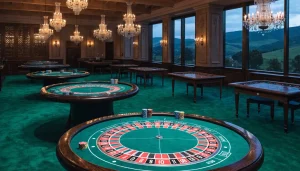
En Prison handles the same zero result differently. Instead of returning part of the stake immediately, the casino holds the even-money bet for the following spin. If that next result falls within the bet’s chosen category, the original stake is returned, but no winnings are added. If the following result does not win the bet, the stake is collected. The bet is thus unresolved after the zero and remains subject to a later result; it is not an immediate refund or an extra opportunity to win.
The French term En Prison translates as “in prison,” describing the stake’s temporary status. La Partage translates as “the sharing,” referring to the division of the stake after zero. These names identify distinct settlement procedures, not separate wheel layouts. La Partage is exclusive to French Roulette; the presence of a single-zero wheel alone does not establish that this rule is available. European Roulette shares the wheel arrangement, but the special zero treatment must be stated as part of the table’s rules rather than inferred from the wheel.
For someone learning the French terms and table markings, the practical distinction is to identify which bets qualify and then understand what happens to them on zero. A label or translated betting area does not, by itself, indicate whether the table uses La Partage or En Prison. The applicable rule determines whether half the stake is returned straight away or the full stake is held for the next spin. Neither procedure applies automatically to every wager.
These rules modify the handling of a particular result; they do not alter the numbered wheel or guarantee a winning method. A betting system cannot make zero cease to matter, and the special treatment does not extend to bets outside the eligible even-money group. The key comparison with European Roulette is therefore narrow but consequential: the wheel is shared, while French Roulette can provide a distinct settlement when zero interrupts an even-money outside bet.
Playing French Roulette Online in New Zealand
French roulette offers a distinctive way to enjoy roulette, so it is worth checking the available operator information before choosing where to play. This overview highlights the specific details provided for each option.
-
Zotabet
- License
- 07017519840
- Payout speed
- 1-3 business days
Zotabet is listed with license number 07017519840. Its stated payout speed is 1–3 business days.
-
BitStarz
- License
- Curaçao Gaming Authority, licence no. OGL/2024/165/0185
BitStarz lists a Curaçao Gaming Authority licence, number OGL/2024/165/0185.
-
Neospin
- License
- Tobique Gaming Commission, licence no. 0000064
Neospin lists a Tobique Gaming Commission licence, number 0000064.
-
Lamabet
- Payout speed
- 1-3 business days
Lamabet states a payout speed of 1–3 business days.
-
N1 Casino
- License
- Malta Gaming Authority, licence no. MGA/B2C/394/2017
N1 Casino lists a Malta Gaming Authority licence, number MGA/B2C/394/2017.
-
Wintino
- Payout speed
- 1-3 business days
Wintino states a payout speed of 1–3 business days.
-
7Bit Casino
- License
- Tobique Gaming Commission, licence no. 0000091
7Bit Casino lists a Tobique Gaming Commission licence, number 0000091.
-
Ricky Casino
- License
- Tobique Gaming Commission, licence no. 0000002
Ricky Casino lists a Tobique Gaming Commission licence, number 0000002.
-
Play Grand
- License
- Malta Gaming Authority, licence no. MGA/B2C/370/2017
Play Grand lists a Malta Gaming Authority licence, number MGA/B2C/370/2017.
An online table labelled French Roulette does not, by its name alone, establish which rules are active. The relevant distinction is whether the game applies La Partage or En Prison to eligible even-money outside bets when zero appears. With either rule in force, the stated house edge for French Roulette is 1.35%. If those provisions are absent, the French label does not establish that this lower edge applies. The table’s rules and information panel should therefore be read as part of the game, rather than relying on its title or promotional description.
Information about the game should make its variant and applicable zero rules identifiable. If the description is unclear, the advertised French format cannot be treated as proof that the special rules are available. The same care applies to bonus terms: a bonus can impose conditions that affect whether roulette play contributes towards wagering requirements, whether winnings remain withdrawable, and what happens if a withdrawal is requested. Those conditions are separate from the roulette rules themselves.
For New Zealand, the legal setting in 2026 is also in transition. The Online Casino Gambling Act 2026 took effect on 1 May 2026 and established a domestic licensing framework for online casino gambling. Existing providers that were already serving people in New Zealand before that date may continue during the transitional period, subject to the Act’s provisions, until 1 December 2026. The full licensed regime is not expected to be operational until 2027. New Zealand does not permit domestic online casinos, and the earlier provision of casino gambling from overseas was not licensed or supervised by a New Zealand regulator. Customers using offshore sites during that earlier period had no domestic government recourse.
The Department of Internal Affairs is New Zealand’s primary gambling regulator and oversees the online casino licensing framework. The Gambling Commission hears licensing applications, decides them, issues online casino licences and approves changes to licence conditions. These roles matter when interpreting claims about regulatory status: during the transition, a site’s availability to New Zealand residents does not by itself demonstrate that it holds a domestic licence. Nor should general wording about a site being “licensed” be read as confirmation of New Zealand authorisation.
Bonus conditions warrant separate scrutiny. Operators may set eligibility rules, wagering requirements, expiry dates, game-contribution rules and withdrawal restrictions. A withdrawal request voids all active or pending bonuses. These conditions can change the practical value of an offer and may apply independently of whether a French roulette game is available. They do not alter the game’s rules or make a real-money bet less risky.

In assessing online French roulette in New Zealand, the key points are therefore distinct: whether the game actually enables La Partage or En Prison, what the bonus terms require, and what the provider’s status is under the changing domestic framework. Roulette outcomes remain random, and every real-money bet can lose; no bonus or advertised game label changes that. Any gambling should be limited to money that can be lost without affecting essential expenses.
Free French Roulette: Practice Without Real-Money Stakes
A free French roulette game can provide a way to learn the appearance and operation of a digital table without placing a cash stake. In a practice mode, the displayed balance is for play within the game rather than money available to withdraw. This can make the interface easier to explore, but it does not make the experience equivalent to wagering with real funds.
Practice is most useful for learning where controls are located and how a round is presented. A player can observe how a selection is entered, how the game registers it and how the result is shown. The wheel and betting layout may also become more familiar through repeated use. These are interface skills, not evidence that a player can anticipate a result or improve the chance of a future outcome.
French roulette is a roulette variant, not a separate activity because it is played in French. The French word *roulette* means “little wheel”; English uses the same word for the game. In casino usage, “French” identifies a version of roulette associated with particular rules, while free play describes whether a cash stake is involved. The terms answer different questions: one concerns the game variant, the other the play mode.
Do
- Use practice mode to learn where controls are located
- Observe how a round is presented
- Familiarise yourself with the wheel and betting layout
Don't
- Treat simulated wins or losses as a financial forecast
- Assume a demo establishes a predictable pattern
- Believe practice can improve the chance of a future outcome
What practice mode can and cannot show
Free online French roulette may be offered as a demonstration, a social game or a mode within a casino-style product. The precise presentation varies. Some versions may provide a simulated balance and a familiar table interface, while others may simplify the game or omit features available in a real-money version. A label such as “free” alone does not establish that the game follows every rule or setting of a particular cash table.
Accordingly, practice can help with basic navigation, but it should not be treated as a test of likely financial results. A sequence of simulated wins or losses is not a forecast. Roulette spins are independent: earlier results do not alter the probabilities of later outcomes. The same principle applies whether a game uses a simulated balance or real money.
A free session also does not remove the risks associated with later wagering. In real-money play, every bet can lose, and the use of a familiar interface does not change that exposure. Nor can a betting routine learned in a demo convert random outcomes into predictable ones. Practice may reduce uncertainty about where a control is or what a screen displays; it cannot establish that a particular pattern will recur.
Checking what “free” means
The distinction between a practice game and a promotion matters. A no-stakes demo does not itself require a player to deposit or withdraw funds. By contrast, a casino promotion may attach conditions to bonus credit or free spins, even where some play is described as free. Promotional wording should therefore be read separately from the description of the game mode.

Bonus money must be wagered 50X within 30 days. Winnings from free spins must be wagered 50X within 7 days. A withdrawal request voids all active or pending bonuses. These conditions concern promotional funds and winnings, not the mechanics of a no-stakes practice session. A displayed bonus should not be assumed to be withdrawable cash.
In New Zealand, online casino regulation is changing under the Online Casino Gambling Act 2026, which took effect on 1 May 2026. The transitional period runs until 1 December 2026, and the full licensed regime is not expected to be operational until 2027. This context does not turn a free-play label into a statement about regulatory status, nor does it make a practice balance real money.
When a free French roulette game is used to become acquainted with an interface, its value lies in observation and repetition: identifying controls, following the on-screen sequence and understanding how the game records a selection. It is not a reliable way to assess future outcomes, prove a strategy or estimate what real-money play will return. Free play can make the format more familiar; the randomness and financial risk of cash wagering remain separate matters.
Live French Roulette, Table Layouts and Lightning Variants
Live French Roulette combines a streamed table presentation with an on-screen betting area. The display may show the wheel and the numbered layout together, but these are two different representations of the game: the wheel determines the physical order of pockets, while the layout arranges betting options for selection. A clear interface should make it possible to distinguish those functions rather than treating the table grid as a map of the wheel.
That distinction matters for called bets. Their groupings follow the positions of numbers around the wheel, not the rows or columns on the betting layout. A screen may place numbers close together for interface reasons even when they are not neighbours on the wheel. Conversely, numbers adjacent around the wheel may appear far apart on the table. The visual layout therefore cannot, by itself, establish which numbers belong to a wheel-based call.
Live presentation should also be separated from game rules. A live stream does not establish that a table is using French rules merely because its title contains “French Roulette”. The relevant terms are those displayed for the particular game, including whether its stated rules include the French features associated with the name. The same care applies to an automated or “auto” label: it describes a presentation category, not, on its own, the rules or the way a particular game is operated. Without the game’s own rule information, neither label settles those questions.
The phrase “not desktop” can refer to an interface that is accessed outside a conventional desktop setup, but it does not identify a separate roulette rule set. Likewise, a demo version concerns how a game is presented for practice, not what the live table’s rules are. A demonstration screen and a streamed table may share visual elements while differing in how play is delivered. Those labels should not be used as evidence of identical controls, rules or outcomes.
Lightning Roulette is a named variant, and related names include First Person Lightning Roulette and XXXtreme Lightning Roulette. These names identify variants, but the names alone do not establish how any particular version selects outcomes, displays special features or differs from another. A description should therefore avoid treating “Lightning” as a complete account of the mechanics. The game’s own rules and on-screen explanation are needed to establish what applies in that version.

For New Zealand audiences, descriptive discussion is not a recommendation to use an online casino. The legal framework for online casino gambling changed in 2026: the Online Casino Gambling Act took effect on 1 May, and its transition period runs until 1 December 2026. Providers that were already serving people in New Zealand before the Act took effect may continue during that period, subject to its transitional provisions. The full licensing regime is expected to become operational in 2027. These legal distinctions do not determine whether a table is genuinely live or whether a variant uses French rules; those are questions about the individual game.
Bonuses may also affect play independently of the table format. Bonus money must be wagered 50X within 30 days, while winnings from free spins must be wagered 50 times within 7 days. A withdrawal request voids active or pending bonuses. These conditions should be read as part of the offer, not inferred from a game’s live, automated or variant label.
Whatever the presentation, roulette outcomes remain random, and every real-money bet can lose. No live stream, layout or variant name changes that uncertainty. Gambling should not involve money that cannot be afforded to lose.
French Roulette Odds, Probability and Betting Claims
The principal odds distinction between French and European roulette is not the wheel: both use a single-zero layout with 37 pockets. It is the treatment of eligible even-money bets when zero appears. With La Partage or En Prison in force, the stated French house edge is 1.35%; European roulette’s is 2.70%. The lower figure reflects the effect of those rules and should not be read as a feature of every table labelled French roulette.
La Partage can reduce the effective edge on qualifying even-money bets when zero lands. En Prison also changes how such a bet is settled after zero, but the precise table rules matter when interpreting the quoted figure. A French roulette table should therefore be assessed by its rules, not just its name. If neither rule applies, the 1.35% figure does not describe the game’s advantage.
Probability concerns the chance of an outcome, while the house edge describes the expected mathematical advantage to the casino over repeated play under the stated rules. These are related but not interchangeable concepts. The lower French figure does not mean that a particular bet is more likely to win on an individual spin, nor does it indicate how a short session will finish. Outcomes remain random, and every real-money bet can lose.

Past results do not alter future probabilities. A run of red results does not make black due, and a number’s absence from recent spins does not make it more likely to appear next. Each spin is independent. A record of previous outcomes may describe what has happened, but it cannot provide evidence that the next result has changed probability. This remains true whether a player tracks results manually or relies on a betting system to interpret them.
For that reason, a French roulette strategy cannot guarantee a profit or remove the house edge. Changing stakes after wins or losses may change the size and timing of gains and losses, but it does not alter the wheel’s probabilities or the rules applied to zero. Systems based on covering more outcomes also do not turn random results into predictable ones. The relevant distinction is between choosing how to stake and changing the underlying odds; only the former is within a player’s control.
Promotional conditions are separate from roulette probability and should not be treated as an improvement to it. Bonus money must be wagered 50X within 30 days, while winnings from free spins must be wagered 50 times within 7 days. A withdrawal request voids active or pending bonuses. These conditions can affect whether promotional funds or related winnings are withdrawable, but they do not change the chance of any spin.
The lower stated edge makes French rules mathematically more favourable for eligible even-money bets than the standard European figure. It does not make outcomes predictable or eliminate risk. Stakes should remain within amounts that can be afforded to lose.
French and American Roulette: The Difference a Second Zero Makes
The key difference between French and American roulette is the wheel, not the language of the betting layout. French Roulette shares the single-zero arrangement used by European Roulette. American Roulette adds a double-zero pocket, giving it a larger set of possible outcomes and a higher house edge.
French Roulette
Uses a single-zero wheel (37 pockets). House edge can be as low as 1.35% when special zero rules apply.
European Roulette
Uses a single-zero wheel (37 pockets). Standard house edge is 2.70%.
American Roulette
Uses a double-zero wheel (38 pockets). House edge is higher at 5.26%.
The American wheel has 38 pockets: one marked zero, one marked double zero, and numbered pockets. Its house edge is 5.26%. By comparison, the single-zero European wheel has 37 pockets and a 2.70% house edge. French Roulette uses that same 37-pocket wheel; its edge can be lower when its special zero rules apply to eligible even-money bets. Without those rules, the single-zero comparison remains the relevant starting point.
The extra pocket affects the relationship between a winning chance and the payout. For bets that cover a group of outcomes, the double zero creates another way for the result to fall outside that group. It therefore increases the mathematical disadvantage compared with a single-zero wheel. This is why the distinction matters even when the table displays familiar numbers and colours.
A specialist review gives payout percentages of 94.70% for American Roulette and 97.30% for European Roulette. Those figures describe the long-run share of stakes returned under the stated game assumptions; they do not predict the result of an individual spin. The review’s figures also should not be treated as a guarantee of the terms on any particular table. The wheel format and applicable rules remain important when interpreting a displayed payout figure.
Some specialist coverage of Atlantic City tables describes half-stake returns on even-money bets when zero or double zero lands. That is a table-specific arrangement, not a standard feature of American Roulette. It should not be assumed from the American label alone. Where such a return is offered, the table rules need to establish which bets qualify and how the return works.

The phrase “French bets on American Roulette” can blur two separate matters: the wheel’s pocket arrangement and the rules attached to a bet. A table using an American wheel does not become French Roulette merely because a familiar bet is available. The defining comparison here is the presence or absence of the second zero, alongside any explicitly stated table rules.
Both formats remain games of chance. Outcomes are random, each real-money bet can lose, and no betting system removes the house edge. Stakes should not exceed what can be afforded to lose.
French Roulette Payouts and the Limits of Free Play
A payout table shows what a winning wager returns under the stated rules; it does not, by itself, show the game’s long-run return. The house edge accounts for the effect of all possible outcomes over time. In French Roulette, the applicable rules matter: when La Partage or En Prison applies, the house edge is lower for eligible even-money bets than it would be without those rules. A displayed payout figure should therefore be read alongside the table’s rules, rather than treated as a complete measure of value.
Payout percentages published for roulette should also be checked for their source and scope. One specialist review reports a 97.30% payout percentage for European Roulette and 94.70% for American Roulette. These are figures from that review, not universal guarantees for every table or game bearing those names. A separate specialist review gives a range of 92.86% to 96.19% for 100/1 roulette. The range itself cautions against treating a label as enough to establish a single return figure. Such numbers describe theoretical returns across play, not what an individual session will produce.
For French Roulette, a payout figure is meaningful only when its relationship to the rules is clear. The single-zero wheel is shared with European Roulette, while French rules can change the treatment of certain bets when zero appears. A figure that omits those conditions may not describe the version being played. Where a game does not state its payout basis or rules clearly, the percentage cannot be interpreted confidently.
Playing French Roulette for fun, including in a free-play mode, does not change the mathematics of the wheel. Spins remain independent: earlier results do not alter the probability of later outcomes. Free play may make it possible to explore how a game displays its payouts, but it cannot establish that a real-money session will follow the same sequence or produce a similar return.
The distinction is between learning the presentation and changing the risk. A practice balance is not money at stake; with real-money play, every bet can lose. No payout percentage promises a particular result, and no pattern of previous spins improves the odds of the next one. Gambling should not involve money that cannot be afforded to lose.
Called Bets in French Roulette: Wheel Neighbours, Not Table Rows
A called bet is identified by reference to positions around the roulette wheel. This differs from a selection described by its location on the betting layout: the table’s rows and columns organise number choices for placing bets, while a call refers to numbers in relation to their neighbours on the wheel. The two arrangements serve different purposes and should not be treated as interchangeable.
In French roulette, the term therefore concerns how a group of numbers is defined, not a separate kind of wheel or a special outcome. A dealer may announce or confirm a call using the wheel as the reference point. The call’s meaning depends on the numbers’ sequence around the rim, rather than on whether those numbers sit in the same row, column or colour grouping on the table.
That distinction matters when interpreting dealer terminology. A spoken call is not necessarily a recommendation, prediction or indication that particular numbers are more likely to appear. It describes a selected grouping. The wheel positions provide its organising principle; the table layout remains a separate way to display and select numbers. Without a stated call and its scope, the phrase alone does not identify which numbers are included.
French roulette is associated with the single-zero game and includes a rule not shared by other roulette versions: La Partage is exclusive to French roulette. That feature does not define a called bet, however. The call concerns wheel-based grouping, whereas La Partage concerns how an eligible bet is treated when zero lands. Keeping these terms separate avoids confusing a betting convention with a rule of the game.
Dealer tips in this context are best understood as explanations of terminology and procedure, not as information that can forecast a spin. Roulette outcomes are random, and previous results do not change the chances of later outcomes. Each real-money bet can lose, so stakes should never exceed what can be afforded to lose. A call can clarify what has been selected, but it cannot alter the wheel’s probabilities or make a result more predictable.
What is a called bet?
A called bet is a selection defined by numbers' positions as neighbours around the roulette wheel rim, rather than their arrangement in rows or columns on the betting table layout.
French Roulette, Casino Choices and the Blackjack Edge Comparison
Casino selection matters less than the rules attached to the table when the aim is to compare roulette house edges. French Roulette uses a single-zero wheel, and its La Partage and En Prison provisions reduce the house edge to 1.35% when they apply to eligible even-money bets. That figure is specific to those rules; it should not be treated as the edge for every wager offered at a French table.
This distinction also shapes what “French Roulette” means in a casino listing. A game carrying that label does not, by the name alone, establish that La Partage or En Prison is active. The table rules determine whether those provisions apply, so the displayed rules are more informative than the title when comparing casino choices. The benefit is limited to even-money bets and does not turn other wagers into lower-edge bets.
A comparison with blackjack requires restraint. Blackjack’s edge depends on the rules and conditions of a particular game, so a claim that either game always has the smaller edge would not follow from the roulette figure alone. A meaningful comparison would need equivalent, clearly specified rules for both games.
French Roulette has its strongest stated odds on even-money bets because the zero rules reduce the casino advantage in that case. This does not mean that a casino offering French Roulette necessarily provides the same terms across every table or bet. Nor does a lower edge remove the possibility of losing: roulette outcomes remain random, and each real-money wager can lose.
The phrase “French Roulette calls” refers to a different matter from casino choice or house edge. Called bets identify groups of wheel positions, rather than rows or sections of the table layout. Their terminology therefore describes how numbers are related on the wheel; it does not indicate a special payout advantage.
In New Zealand, the legal setting for online casinos is also changing. The Online Casino Gambling Act 2026 took effect on 1 May 2026 and established a transitional period ending on 1 December 2026. Providers already serving New Zealand customers before the Act began may continue during that period, subject to its transitional provisions. These licensing changes concern the status of operators, not the probability or edge of a roulette game.
French Roulette Gold Live: What the Available Facts Establish
“Gold” may appear in the name of a French roulette game, but the label alone does not establish how that particular game is presented or which rules it applies. The relevant distinction is between the recognised rules of French Roulette and details attached to a specific product title.
At the rules level, French Roulette shares the single-zero wheel layout used in European Roulette. Its distinctive rules can include La Partage and En Prison. La Partage is exclusive to French Roulette; it is not simply another name for the single-zero wheel. These rules therefore provide a basis for identifying French roulette, while a Gold-branded title needs to be assessed on its own stated rules.
The word “Live” indicates how the game is described, but it does not, by itself, confirm a particular table layout, dealer arrangement, software provider or set of additional features. Nor does a Gold label establish that the game differs from standard French Roulette. Those details require confirmation in the game’s own information, rather than inference from its name.
A useful description of a French Roulette Gold Live product would make clear whether it uses the French single-zero format and whether La Partage or En Prison is available. The presence of one of these features should not be assumed merely because “French Roulette” appears in the title. Conversely, a Gold label does not show that the standard French rules have been changed.
This separates what the name can suggest from what it proves. French Roulette has a recognisable relationship to European Roulette through its wheel layout, alongside rules such as La Partage and En Prison. The specific meaning of “Gold” in a live product, however, cannot be determined from the branding alone. Until the game’s rules identify its features, claims about a special Gold format would go beyond what the title establishes.
Casino Games in New Zealand: Roulette, Blackjack & More
Content created by the «casinopaymentadvisernz.com» team