
Separate the wheel’s odds from its multiplier claims
 Available in US
A practical look at roulette layouts, live and demo play, prediction limits, and what the available evidence says about Lightning Roulette.

How Lightning Roulette’s number and multiplier mechanics fit standard roulette
Lightning Roulette places a numbered wheel at the centre of a game that also draws attention to multipliers. The wheel provides a familiar reference point: roulette outcomes are tied to pockets, while the multiplier theme signals an additional feature. These two elements should not be conflated. Standard roulette rules describe how numbered outcomes are settled; the game’s name alone does not establish the precise operation of its multiplier mechanic.
The wheel layout matters because roulette variants do not all contain the same pockets. European Roulette has 37: numbers from 1 to 36 and a single zero. American Roulette has 38, adding a double zero to the same numbered sequence. This difference changes the probability structure and the house edge. The European layout has a 2.70% house edge, compared with 5.26% for the American layout. Those figures describe the standard versions, not a special multiplier feature.
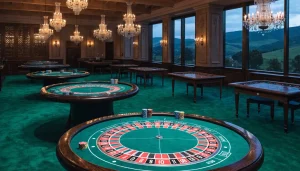
A roulette table presents betting positions, but the result is determined by the pocket where the ball comes to rest. A straight-up wager concerns one number; other bets cover defined groups of numbers or broader categories. The wheel and table are related representations of the same set of outcomes, but their arrangement is not identical. For called bets, grouping follows numbers’ positions on the wheel rather than their positions on the betting layout. That distinction is relevant when a game refers to wheel-based number groupings.
Lightning Roulette brings fast-paced live roulette action to the table, so choosing a casino is part of finding a suitable place to play. This list highlights the details available for each option.
-
Zotabet
- License
- 07017519840
- Payout speed
- 1-3 business days
Zotabet lists licence number 07017519840. Its stated payout speed is 1–3 business days.
-
BitStarz
- License
- Curaçao Gaming Authority, licence no. OGL/2024/165/0185
BitStarz lists a Curaçao Gaming Authority licence, number OGL/2024/165/0185.
-
Neospin
- License
- Tobique Gaming Commission, licence no. 0000064
Neospin lists a Tobique Gaming Commission licence, number 0000064.
-
Lamabet
- Payout speed
- 1-3 business days
Lamabet states a payout speed of 1–3 business days.
-
N1 Casino
- License
- Malta Gaming Authority, licence no. MGA/B2C/394/2017
N1 Casino lists a Malta Gaming Authority licence, number MGA/B2C/394/2017.
-
Wintino
- Payout speed
- 1-3 business days
Wintino states a payout speed of 1–3 business days.
-
7Bit Casino
- License
- Tobique Gaming Commission, licence no. 0000091
7Bit Casino lists a Tobique Gaming Commission licence, number 0000091.
-
Ricky Casino
- License
- Tobique Gaming Commission, licence no. 0000002
Ricky Casino lists a Tobique Gaming Commission licence, number 0000002.
-
Play Grand
- License
- Malta Gaming Authority, licence no. MGA/B2C/370/2017
Play Grand lists a Malta Gaming Authority licence, number MGA/B2C/370/2017.
It would therefore be unsafe to infer a payout rule from the word “multiplier” or to treat the feature as part of ordinary roulette. The standard wheel explains the underlying numbered outcomes; any additional feature requires its own clearly stated rules before its effect can be assessed. In particular, the European and American house-edge figures cannot be used on their own to calculate a return that depends on an unspecified multiplier process.
This separation also clarifies what can be said about the game’s numbers. A number on the wheel is an outcome, not a prediction. Each spin is independent, so a previous result does not alter the probability of a particular outcome on the next spin. A run of repeated results, or a long interval without a particular number, does not make that number more or less likely on a later spin. This remains true whether attention is on one pocket, a group, or the game’s multiplier theme.
Questions about betting on every number raise a separate issue from the rules for an individual selection. Covering all numbered positions does not change where the ball lands or make the outcome predictable. A calculation of the net result would depend on the exact wheel, the stakes allocated to each position, and any applicable game-specific payout rules.
The word “rules” can refer to several things: the pocket layout, the available bet types, settlement of winning and losing wagers, and any additional feature. The first parts can be understood from the relevant roulette variant. The multiplier component needs a separate, explicit explanation of its trigger and its effect on payouts. It should not be assumed that every Lightning Roulette table uses identical terms merely because the game carries the same name.
For the same reason, there is no particular number that can be identified as the one to play on the basis of previous spins. The probability of future outcomes is not improved by choosing a number that has been absent, recently appeared, or been associated with a past multiplier. The wheel’s layout and the game’s named feature describe how the product is presented; they do not provide evidence that one number is more likely than another.
The clearest way to assess Lightning Roulette is to keep the established roulette structure distinct from the additional feature. Pocket counts and standard house-edge figures describe the European and American formats. Independence describes the relationship between successive spins. Multiplier effects, by contrast, depend on the game’s stated terms and cannot be inferred from the standard wheel alone.
Playing Lightning Roulette in a live online casino
A live online casino combines a roulette table with a video connection to a dealer. The format is intended to show the game as it takes place, while the online interface provides the means to place and manage bets. This describes the general live-casino setting; it does not establish that a particular Lightning Roulette table is offered to players in New Zealand or that every product carrying the name uses the same presentation.
The distinction between a game and its delivery format matters. “Lightning Roulette” identifies a named roulette variant, while “live” describes a way a casino game may be presented online. A listing or search result that uses both terms is not, by itself, evidence of a currently accessible live table. Nor does a game title establish the table’s features, operator, or conditions of access. Those details need to be checked against the actual service rather than inferred from the name.
In a live table, the video feed is one part of the experience; the betting interface is another. Players generally use on-screen controls to select wagers and submit them during the period allowed for betting, while the dealer conducts the table game. The screen may also display the current round and available betting areas. These are broad characteristics of live casino interfaces, not confirmed specifications for a Lightning Roulette table. Layout, controls, and other features can differ between services.
The video presentation can make the table’s activity visible, but it does not make the outcome more predictable. Roulette spins are independent: earlier results do not alter the probability of outcomes on later spins. A sequence shown on screen therefore cannot establish what the next spin will produce. This point applies whether a round is watched through a live feed or presented through another online format.

The online setting also changes what should be assessed before a session. A live table depends on a functioning internet connection and a device capable of displaying its video and controls. If the connection is interrupted, the practical consequences may depend on the service’s own rules and procedures. Those terms should not be assumed from the game name. The same caution applies to whether a table is available at a given time, which languages or interface options it supports, and how it handles a submitted bet if the connection fails. These are service-specific matters, not inherent properties of roulette.
For New Zealand, a general description of live online casinos should not be read as confirmation that any particular service is available or endorsed. A product page, an online listing, or the presence of a game title elsewhere does not establish local access. Availability and the applicable conditions can depend on the provider and the relevant regulatory position. The game name alone cannot resolve either question.
The live format may be relevant to someone comparing how roulette is presented, but it does not settle what a specific Lightning Roulette product offers. Confirmation would require clear information identifying the table, its delivery format, and the terms attached to access. Without that information, claims about a particular live version, its interface, or its availability remain unsubstantiated.
First Person Lightning Roulette: what the available evidence establishes
First Person Lightning Roulette is a named roulette variant. That name identifies a product, but it does not, on its own, describe how the game is presented or how a particular service makes it available. The distinction matters: a title containing “First Person” is not enough to establish that play uses a first-person camera, a particular interface, automated dealing or a live dealer.
The label should therefore be treated narrowly. It supports identifying the variant by name, not inferring its technical format. Nor does the name establish whether the game can be accessed in New Zealand, which platforms carry it, or whether it is offered in a particular account. Those are separate claims about distribution and service.
Format and availability are separate questions
“First Person” may invite assumptions about the viewpoint or interaction style. Those assumptions cannot be confirmed from the title alone. In particular, the name does not establish that First Person Lightning Roulette is a live-dealer game. Live presentation, simulated presentation and other interface details need to be verified from information specific to the product and the service providing it.
The same caution applies to claims about sites offering the game. A listing or promotional reference would need to identify the exact variant and the relevant service; a general mention of Lightning Roulette does not establish that the First Person version is included. Availability can also differ between services and may change over time. No particular New Zealand site can be identified as carrying it on the basis of the game name alone.
Payment options are similarly service-specific. A claim that the game can be funded by phone payment concerns the operator’s payment arrangements, not a feature established by the variant’s title. It should not be treated as confirmation that this method is accepted for a particular account or available to New Zealand customers.
Return figures need to match the game
RTP, or return to player, is a long-run theoretical measure, not a promise about an individual session. A figure for standard European Roulette cannot automatically be assigned to First Person Lightning Roulette merely because both names include roulette. Any stated percentage needs to be tied to the exact game rules and version being discussed. Without that connection, presenting a specific RTP as a property of the First Person variant would imply more than the name establishes.

The distinction is useful when comparing product descriptions. A general roulette statistic may describe a wheel type, while a game-specific return figure would need to apply to the named product. The two are not interchangeable without supporting detail.
What the name can and cannot support
The available identification is limited but clear: First Person Lightning Roulette is a named game variant. Its title alone does not verify the display format, whether a dealer is involved, a demo mode, a return percentage, payment methods, or current availability on any site. These details should be assessed independently rather than inferred from the wording of the name.
This is not a claim that the variant lacks any particular feature. It is a boundary on what can be concluded from its identification. Where product descriptions make additional claims, those claims require product-specific confirmation; where only the title is given, the title is all that can be established.
Roulette strategy and the limits of prediction
A roulette strategy can determine how stakes are arranged, but it cannot make a future result more likely by relying on earlier spins. Each spin is independent: the sequence already observed does not change the probability of any outcome on the next spin. A run of one colour, number range or other result therefore provides no evidence that a different result is “due”.
This distinction matters when assessing claims about the best approach to Lightning Roulette or a way to beat it. A staking pattern may change how often a player wins smaller amounts, how large a possible loss becomes, or how long a bankroll lasts. Those effects do not show that the pattern improves the underlying odds. Increasing stakes after a loss, for instance, does not alter the wheel’s probabilities; it increases the amount exposed to subsequent outcomes.
The house edge gives a useful baseline for comparing roulette formats. On a standard single-zero European wheel, it is 2.70%. That figure describes the game’s mathematical advantage over repeated play under its stated rules; it is not a forecast of what will happen in an individual session. Short-term results can differ substantially from that expectation, but variation does not establish that a system has changed the odds.

French Roulette can offer better odds for even-money bets when La Partage or En Prison applies. These rules affect eligible outside bets when zero lands: La Partage returns half the stake, while En Prison carries the bet forward to another spin under its own settlement conditions. The resulting house edge for those bets is lower than the standard single-zero figure. This is a rule-based difference, not evidence that a betting sequence can overcome the house edge.
That comparison should not be transferred automatically to Lightning Roulette. A standard roulette baseline can help frame a discussion, but it does not by itself establish the exact return or house edge of a particular variant. Nor does the word “strategy” establish that a system is effective. Claims require a clearly defined set of rules and reliable evidence about how those rules affect outcomes.
A practical evaluation separates three questions: whether a method changes the probability of a result, whether it changes the size or distribution of stakes, and whether its claimed performance is supported by evidence. In roulette, arranging bets differently does not make past outcomes predictive. A method may still suit a particular preference for risk, but that is not the same as improving the chance of a favourable result.
No system removes the possibility of loss, and every real-money roulette bet can lose. The sound limit on any staking plan is therefore financial rather than predictive: more should not be risked than can be afforded to lose.
How to play—and what ‘winning’ can and cannot mean
Playing roulette involves choosing a wager and placing it before the relevant betting period closes. A result is then determined by the spin. The precise controls and timing can differ between games and interfaces, so instructions displayed for a particular table or app are more reliable than assumptions based on another version. The name Lightning Roulette alone does not establish which controls, options or app features are available.
- Understand the game's rules and betting options
- Ensure the amount at stake is affordable to lose
- Establish a plan to stop play without chasing losses
A win means that the result meets the terms of a wager and produces a payout under the game’s rules. It does not mean that a player has found a repeatable method for making future spins favourable. Roulette outcomes are random, and spins are independent: earlier results do not change the probability of outcomes on later spins. A run of wins can be followed by losses, just as a run of losses does not make a win due.
This distinction matters when considering claims about how to win. No betting choice can guarantee a profitable result, and every real-money bet can lose. A sequence that happened to work in past play is not evidence that it will work again. Nor can a claim of certainty be justified by describing a method as a system, a trick or a way to beat the game. The same limitation applies to claims that a particular selection is the best way to bet: suitability depends on the player’s aims and tolerance for risk, while the spin itself remains uncertain.
Requests for methods to cheat do not change those probabilities. Cheating is not a legitimate way to play, and no instructions for manipulating a game can make an outcome reliably predictable. Claims that an app or tool can reveal a future result should be treated with the same caution: a display or prediction is not evidence that independent roulette outcomes can be known in advance. An app download, where offered, is a means of accessing software, not proof of an advantage or a guaranteed win.
Before placing a wager, the practical questions are whether the game’s rules and betting options are understood, whether the amount at stake is affordable to lose, and whether play can stop without chasing losses. No real-money stake should exceed what can be lost without affecting essential spending. If uncertainty about results makes continued play difficult to control, stopping is safer than increasing a stake in an attempt to recover earlier losses.
Promotional funds also have conditions separate from the outcome of a spin. Bonus money must be wagered 50X within 30 days, while winnings from free spins must be wagered 50X within 7 days. Making a withdrawal request voids all active or pending bonuses. These terms can affect whether promotional balances or related winnings remain available, so they should not be confused with a higher chance of winning at roulette.
Winning, therefore, describes a result, not a dependable method. A player may win on a particular wager, but neither a sequence of previous results nor a claimed system removes the possibility of losing the next one.
Free online play: what can be confirmed
Free access to an online roulette game is not the same as a real-money game with its stakes removed. A site may display a game without allowing it to be played, or may offer a play mode whose rules and functions differ from those used when wagering. The label “free play” alone does not establish which arrangement applies.
For Lightning Roulette, no particular free-play option or provider can be identified as available to New Zealand players. Naming a casino as a place to play would therefore imply a level of access that cannot be established. The same caution applies to pages that describe a free version without clearly identifying the service, its terms or the game being offered.
The distinction matters because a game’s presentation does not settle how its outcomes or payouts work. A free-play screen may be used to explore an interface, but it should not be treated as evidence about real-money conditions. Nor does a displayed payout figure, by itself, establish what a player would receive under a particular set of rules. The applicable table rules and bet type determine how a result is settled.
Free access also does not eliminate the difference between simulated play and gambling with money. No stake is at risk in a genuinely free mode, while every real-money roulette bet can lose. Outcomes remain random; earlier results do not make a later result more or less likely. A run of displayed outcomes in a free mode cannot provide a dependable forecast of real-money spins.
A useful assessment of any free online offer begins with its terms, not its promotional label. The service should state whether play is genuinely without charge, whether registration is required, and whether any displayed balance or winnings can be withdrawn. These details should not be inferred from a button marked “play” or from a game image. If the terms do not explain the arrangement, the label alone is insufficient to establish it.
The rules of the roulette variant also matter when comparing free and paid access. European Roulette has a single-zero layout and a 2.70% house edge; American Roulette has both a single zero and a double zero, with a 5.26% house edge. Those figures describe the named roulette formats, not an unverified Lightning Roulette free-play offering. They cannot be transferred to a game merely because its screen resembles roulette.

Accordingly, free online access to Lightning Roulette should be treated as an offer that requires clear identification and terms, rather than as a standard feature of the game. A site’s claim should not be taken as confirmation that a playable version is available in New Zealand, that its rules match a real-money version, or that any apparent payout can be withdrawn. If real-money play is involved, it is important not to risk more than can be afforded to lose.
Bonuses, tracking claims, and prediction tools
A Lightning Roulette bonus is not a single, standard offer. New Zealand operators may advertise promotions subject to eligibility rules, wagering requirements, expiry dates, game-contribution terms and withdrawal restrictions. The headline description alone therefore cannot establish what a player must do to qualify, which games count towards wagering, or whether a withdrawal affects the offer.
The stated conditions are specific: bonus money must be wagered 50X within 30 days, while winnings from free spins must be wagered 50X within 7 days. A withdrawal request voids all active or pending bonuses. These terms can determine whether promotional funds or related winnings remain available, so they are material conditions rather than minor details. Eligibility, expiry and game contribution can also differ between offers; no single rule should be assumed to apply to every promotion.
The currency used for a deposit does not change roulette’s outcome probabilities. A reference to Bitcoin in connection with a Lightning Roulette bonus is not evidence that a particular operator accepts that payment method or offers a promotion for it. Payment availability and bonus eligibility are separate matters, and neither should be inferred from a game’s name.

Tracking tools may record previous results or display them in a sequence. Such records describe spins that have already occurred; they do not alter the probabilities of later outcomes. Roulette spins are independent, so a run of one colour or number does not make another result due. A tracker can organise past observations, but the record cannot establish what the next spin will produce.
The same distinction applies to prediction tools. A “predictor” may present a suggested number or pattern, but a suggestion is not evidence that future results can be forecast. Past outcomes do not provide a reliable signal for the next independent spin. Claims that software can identify a winning number from a history of results should therefore be treated as unsupported unless they demonstrate a valid basis beyond pattern-fitting to past data.
Promotional wording and prediction claims also address different things. A bonus changes the terms under which promotional credit may be used; it does not change the random character of roulette outcomes. Nor does meeting wagering conditions guarantee that a balance will be available for withdrawal: the offer’s restrictions still apply, and a withdrawal request voids active or pending bonuses.
Any real-money roulette bet can lose, regardless of whether promotional credit or a tracking tool is involved. Money that cannot be afforded to lose should not be risked. (397 words)
Roulette results and statistics: what the numbers can show
Roulette statistics describe features of a game’s rules or summarise recorded outcomes. They do not provide a reliable forecast of the next result. Each spin is independent, so earlier numbers do not alter the probabilities on a later spin. A sequence that appears uneven may be interesting to record, but it is not evidence that a particular number is now more or less likely.

The house edge and payout percentage are related measures, but they are not interchangeable descriptions of a recent run of results. The house edge expresses the casino’s mathematical advantage under specified rules. For single-zero European Roulette, that edge is 2.70%; for American Roulette, with both a single and a double zero, it is 5.26%. These figures reflect the wheel and payout rules, not a prediction about an individual session.
A specialist review gives payout percentages of 97.30% for European Roulette and 94.70% for American Roulette. Those figures correspond to the respective house edges, but should be read as calculated game measures rather than a promise about the share returned during a short period of play. Actual results in a particular sequence can differ substantially from a theoretical rate.
The same specialist-review source reports a payout-percentage range of 92.86% to 96.19% for 100/1 Roulette. That range indicates that the game’s precise rules matter when interpreting a percentage. A variant name alone is not enough to establish its return figure; the table rules and paytable need to be identified before comparing statistics. The reported range should therefore be treated as a source-specific description, not as a universal value for every version bearing that name.
A results history can show which outcomes have occurred within the displayed record. It cannot establish that the sequence will continue, reverse, or balance out on a particular spin. Likewise, a headline statistic for Lightning Roulette should not be treated as verified merely because it appears beside the game’s name. A percentage is meaningful only when its rules, calculation basis, and scope are clear.
This distinction is relevant to searches for Lightning Roulette results or statistics, and to descriptions that loosely group casino games as slots. Roulette percentages describe roulette rules; they do not by themselves verify a game-specific return figure or explain how a particular version operates. The most defensible interpretation is limited: statistics can compare stated mathematical properties and describe past outcomes, while future spins remain uncertain.
Lightning Roulette demo play and the limits of demo claims
A demo label can suggest a version of Lightning Roulette that can be played without staking money, but the label alone does not establish that such a mode exists or can be accessed. Claims about a free demo should therefore be treated as unverified rather than as a description of a known product.
The distinction matters because “demo” can refer to different things: a playable version, a preview, a promotional page, or simply a description used in a listing. Nor does a page mentioning demo play establish that a playable game is available in New Zealand, or that access is unrestricted.
A claim about a demo’s features also requires care. It should not be assumed that a non-stakes version reproduces every aspect of a real-money game, including its interface, round timing, or any game-specific mechanics. The same caution applies to claims that a demo can be used indefinitely or without registration: neither follows from the word “demo.”
Demo descriptions should not be confused with evidence about real-money results. A practice mode, if one is offered, would not establish that outcomes can be predicted or that a betting approach will produce a profit. Roulette outcomes are random, and every real-money bet can lose. No demo claim changes that underlying uncertainty.
A statement that it can be played free of charge should not be treated as confirmed unless the relevant service clearly identifies the mode and its terms. In real-money play, no stake should exceed what can be afforded to lose.
New Zealand’s online casino framework and the 2026 context
The Online Casino Gambling Act 2026 established New Zealand’s first domestic licensing framework for online casino gambling and came into force on 1 May 2026. It changes the regulatory setting for online casino services, but does not by itself establish that any particular game or service is licensed or available. That includes Lightning Roulette offered online.
The Department of Internal Affairs is New Zealand’s primary gambling regulator and oversees the online casino licensing framework. The Gambling Commission has a distinct role: it hears and determines casino licensing applications, issues licences, and approves changes to licence conditions. These responsibilities describe the institutions’ functions; they should not be read as confirmation of a licence for any named provider.
The transition provisions are relevant to the 2026 context. Providers that were already serving people in New Zealand before the Act commenced may continue operating until 1 December 2026, subject to those provisions. The full licensed regime is not expected to be operational until 2027. Providers that have not applied for a licence must cease conducting online casino gambling in New Zealand by 1 December 2026.
Before the Act, online casino services based outside New Zealand were not licensed or supervised by a New Zealand regulator, and customers wagering with offshore websites had no domestic government recourse. The new framework introduces domestic oversight, but its transition period means the regulatory position depends on the provider and its circumstances. A reference to online roulette in New Zealand in 2026 therefore cannot, on its own, establish that a particular Lightning Roulette service holds a local licence or falls within the transitional provisions.
Casino Games in New Zealand: Roulette, Blackjack & More
Content created by the «casinopaymentadvisernz.com» team