
Understand the draw before you enter
 Available in US
See how Keno entries, number matching, prize tables and scheduled draws fit together in the New Zealand game.

How a Keno Draw Works
A Keno draw has two basic parts: an entry is associated with a scheduled draw, and the draw produces a set of numbers. In New Zealand Keno, the draw takes 20 numbers from a pool of 80. That fixed structure defines the event. The pool is the full set from which the drawn numbers come; the result is the group of 20 numbers produced for that draw.
The number of entries does not change the size of the draw. Whether there are many entries or few, the draw still consists of 20 numbers selected from the same pool of 80. It is therefore useful to distinguish the draw itself from an individual entry. The draw establishes the result; an entry records a participation in relation to a scheduled draw. The 20 numbers are not drawn from a separate pool created for each entry.
An entry must be made before the scheduled draw time. Entry closes at that time, so the cutoff is part of the mechanics rather than an administrative detail that can be ignored. Once the scheduled time has been reached, an entry cannot be added to that draw. The timing links the entry to a particular event: the relevant result is the one produced for the draw it was entered into, not a result from a different scheduled draw.
Choosing a keno site in New Zealand is easier when you can quickly check the information available for each option. Use this list as a reference point while considering what matters to you.
-
Zotabet
- License
- 07017519840
- Payout speed
- 1-3 business days
Zotabet lists licence number 07017519840 and a payout speed of 1–3 business days.
-
BitStarz
- License
- Curaçao Gaming Authority, licence no. OGL/2024/165/0185
BitStarz lists a Curaçao Gaming Authority licence, number OGL/2024/165/0185.
-
Neospin
- License
- Tobique Gaming Commission, licence no. 0000064
Neospin lists a Tobique Gaming Commission licence, number 0000064.
-
Lamabet
- Payout speed
- 1-3 business days
Lamabet lists a payout speed of 1–3 business days.
-
N1 Casino
- License
- Malta Gaming Authority, licence no. MGA/B2C/394/2017
N1 Casino lists a Malta Gaming Authority licence, number MGA/B2C/394/2017.
-
Wintino
- Payout speed
- 1-3 business days
Wintino lists a payout speed of 1–3 business days.
-
7Bit Casino
- License
- Tobique Gaming Commission, licence no. 0000091
7Bit Casino lists a Tobique Gaming Commission licence, number 0000091.
-
Ricky Casino
- License
- Tobique Gaming Commission, licence no. 0000002
Ricky Casino lists a Tobique Gaming Commission licence, number 0000002.
-
Play Grand
- License
- Malta Gaming Authority, licence no. MGA/B2C/370/2017
Play Grand lists a Malta Gaming Authority licence, number MGA/B2C/370/2017.
This gives the process a clear order. First, an entry is submitted while entry remains open. At the scheduled time, entry closes. The draw then provides its result of 20 numbers from the pool of 80. Understanding that sequence helps separate the point at which participation is recorded from the point at which the draw result is produced. The cutoff does not alter the number pool or the number of results; it determines whether an entry is in place for the scheduled event.
The phrase “20 from 80” describes the central structure of Keno NZ. Eighty is the size of the pool, while 20 is the number drawn for a single result. These figures refer to different parts of the process. The pool contains the possible numbers available to the draw, and the draw produces a smaller set from it. The result is not a selection of all 80 numbers, nor does the draw produce a new pool for each entry.
It also matters that the draw is a defined event with a scheduled closing point. A person looking at an entry and a result is considering two separate records: what was entered before the cutoff and which numbers were drawn for that event. The draw’s 20-number result is the same reference point for entries associated with that scheduled draw. Without this separation, it is easy to confuse the entry with the draw, or to treat the closing time as though it were simply part of number selection.
 Roulette for Real Money in New ZealandCompare roulette formats and real-money play, including the 2.70% house edge stated for European and French wheels and how it differs from…
 Best Live Casinos in New Zealand: Rules and PlayLearn about live dealer games, table rules, Bitcoin payments and withdrawals. New Zealand’s 2026 Act established its first domestic online-casino licensing
In practical terms, the most basic account of how Keno works in New Zealand is not complicated: the game uses a pool of 80 numbers, a draw produces 20 of them, and entries close at the scheduled time. Those mechanics explain the boundaries of a single draw without requiring assumptions about how a particular entry is completed or how a result is assessed. The draw count and pool size describe the event; the closing time determines when entries for that event stop being accepted.
A result belongs to its own scheduled draw. The fact that another draw may also use a pool of 80 does not make its result part of the earlier event. Each scheduled draw has its own cutoff and its own group of 20 drawn numbers. This event-based structure is the essential starting point for understanding Keno: entries must be placed before the relevant draw closes, and the draw’s result is formed from 20 numbers selected from the pool of 80.
Choosing Numbers and Matching Them to Win
Keno number selection has two parts: the size of the chosen set and how many of those choices match the drawn numbers. The number of hits cannot be interpreted on its own. A result has to be considered in relation to how many numbers were selected, because Keno payouts depend on both factors.
The stated selection range for Keno is from one number to ten. However, descriptions of the game do not agree on the range for online Keno: one gives the same one-to-ten range, while another says players may choose between four and twenty numbers. These are conflicting accounts, not a single consistent rule. The selection options therefore should not be assumed to be identical across every Keno format.
Selection size changes what a result means
A hit is a selected number that also appears among the drawn numbers. For a small selection, each hit represents a larger share of the chosen set. With a larger selection, the total number of hits may be higher, but that count must be read against the number of choices made. This is why a hit total alone does not establish what a Keno entry has won.
For instance, the same number of matched choices can represent different outcomes when the entries contain different numbers of selections. Keno’s payout relationship accounts for that difference: it is based on both the number of hits and the selection size. A comparison between entries is meaningful only when both elements are known. The number selected is not merely a preference about how many chances to include; it is part of the basis on which the result is assessed.
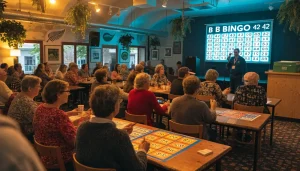 Casinos with Bingo in New Zealand: How It WorksLearn how bingo rounds, ticket patterns and casino formats work, alongside access, bonuses and banking topics. Each ticket is assessed separately.
 Casinos with Demo Mode in New Zealand: Free PlayLearn how casino demo games work, what virtual credits can and cannot show, and why free play differs from real-money gambling. Browser…
This also means there is no single universal hit count that answers how many numbers must match to win. The question depends on the selection size and the relevant game’s payout rules. Without that context, a statement such as “three hits win” would be incomplete and could misrepresent how an entry is evaluated. The selection and hit relationship can be described generally, but an exact threshold or prize cannot be inferred from the hit count alone.
What “winning” can mean
A matched number is a hit, but the existence of hits does not by itself specify a prize. The payout depends on the combined pattern of selections and matches. A small number of hits in one selection may not correspond to the same payout outcome as that hit count in another selection. Conversely, a larger hit count does not establish a particular amount without knowing the selection size and the applicable payout terms.
Accordingly, “how many numbers to win” is not answered by one fixed figure that applies to every entry. The relevant comparison is between the numbers chosen and the numbers matched, interpreted under the game’s payout structure. A claim about how much a particular entry could return would require the corresponding payout information; the general hit relationship alone does not provide a monetary amount.
Choosing more numbers should not be described as a guaranteed route to a win. Selection size changes the basis for assessing hits, but it does not ensure that the chosen numbers will match. Nor does a larger hit total automatically establish a larger prize across different selection sizes. The meaningful unit is the result as a whole: selection count, hit count, and the payout conditions for that format.
Do
- Consider the selection size when assessing hits
- Use the relevant game's payout rules to determine prizes
- View the result as a combination of selection and hits
Don't
- Assume a hit total alone establishes a win
- Rely on a universal hit count for all entries
- Treat larger selections as a guaranteed route to winning
Number choice and frequently drawn numbers
References to “hot” or commonly drawn Keno numbers describe frequencies observed over a set of past results. Such a label is a description of recorded history, not a rule for choosing numbers and not a statement about the outcome of a particular entry. A frequency list also does not answer whether a chosen set will produce enough hits for a payout; that depends on the result and the selection size.
For the same reason, a list of numbers that appeared often in earlier results should not be treated as a reliable guide to a future match. It may summarise what happened within the period counted, but it does not change the way a current entry is assessed. Number selection remains separate from hit evaluation: the selected set is compared with the drawn set, and the payout relationship uses both the number of selections and the number matched.
A careful reading of any Keno result therefore begins with the size of the entry, then identifies its hits, and only then considers the applicable payout rules. This avoids treating a raw hit count as a complete answer. It also keeps claims about number choice within what the mechanics establish: players select a set of numbers, some or all may match, and the value of that outcome depends on both selection size and hits.
Keno Rules and Entry Costs in New Zealand
The stated starting price for a Keno line is $1. Standard Keno also has set cost choices for each selection: $1, $2, $3, $4, $5, $10, $20, $50 and $100. These are distinct entry-cost options, rather than a continuous range. The cost selected is therefore a separate practical decision from which numbers are chosen.
 Craps Gambling in New Zealand: Online Rules and BetsLearn how two-dice wagers, the come-out roll, points and common bets work, and why Bitcoin support must be verified separately from the…
 Blackjack Sites in New Zealand: Rules and LicensingExplore licensing, game rules, live and software-shuffled tables, payments and payouts, including how DIA oversight differs from the Commission’s licensing role.
The available choices span low and higher amounts, but the list does not establish that every game format or entry channel offers an identical set of options. In particular, the price of a line should not be confused with the number of numbers included in a selection. They describe different aspects of an entry: the line price identifies a starting cost, while the listed amounts describe what can be staked per selection.
Descriptions of the number range conflict. One account says Keno allows players to choose from one to ten numbers; another describes online Keno as allowing four to twenty. Those ranges cannot be combined into a single standard rule.
For someone comparing entry costs, the relevant distinction is between the amount attached to a selection and the chosen number set. A $1 line is the stated entry-level price, but it does not mean that every possible entry costs $1: higher per-selection amounts are also listed. Conversely, choosing a higher amount does not, by itself, specify how many numbers are selected. These features need to be read separately when interpreting the terms for a particular game.
The options are not presented as every whole-dollar price between the lowest and highest listed amounts. The stated menu includes several gaps: after $5, the next listed amount is $10, followed by $20, $50 and $100. Accordingly, a cost should not be inferred merely because it falls between two listed choices. The defined amounts, rather than an assumed sliding scale, are the useful reference when describing the standard options.
The distinction between standard and online Keno matters because the stated number-selection ranges differ. A description of online play gives a range beginning at four and ending at twenty, while the other account gives a range from one to ten for Keno. The overlap does not make the descriptions equivalent: each also includes numbers absent from the other.
In practical terms, the clearest cost statement is that a line starts at $1, with standard per-selection choices extending through the specified amounts to $100. That describes the stated price structure without implying that every selection costs the same or that a higher stake changes the selection rules. The number-range disagreement remains separate from the price information, so the two should not be treated as one rule.
Keno in New Zealand: Regulation and Licensing Context
Keno’s regulatory position depends on the form in which it is offered. The game name alone does not establish whether a service falls within the online casino framework: the relevant distinction is between a Keno game offered as part of online casino gambling and other forms of gambling. The framework for online casinos is changing, so older descriptions of the market may not reflect the position under the current law.
The Online Casino Gambling Act 2026 came into force on 1 May 2026 and established New Zealand’s first domestic licensing regime for online casino gaming. The regime is not expected to be fully operational until 2027. During the transition, providers that were already serving people in New Zealand before the Act took effect may continue until 1 December 2026, subject to the Act’s transitional provisions. Providers that had not been operating in the market before that date are not covered by this permission to continue.
 Lightning Roulette in New Zealand: Rules and OddsUnderstand Lightning Roulette’s multiplier theme, standard roulette odds, live and demo play, and prediction limits; European roulette’s house edge is 2.70%.
 Online Baccarat in New Zealand: Rules and PlayLearn how baccarat hands are scored using only the final digit, and explore bets, online formats, licensing and casino selection.
The transition also has a practical boundary. Providers that have not applied for a licence must stop online casino gambling in New Zealand by 1 December 2026. If an application is declined, the provider must cease those operations and leave the market. The Act is therefore not merely a statement of future policy: it sets rules for how existing services move toward a licensed system. The full licensing regime, however, is not yet expected to be operational during the transition.
The Department of Internal Affairs and the Gambling Commission have distinct responsibilities within this structure. The Department of Internal Affairs is New Zealand’s primary gambling regulator and oversees regulation of the online casino licensing framework. Its role is not interchangeable with the Commission’s licensing decisions. The Gambling Commission hears casino licensing applications and determines them; it also issues online casino licences and approves changes to licence conditions. In practical terms, the Department has oversight of the framework, while the Commission is responsible for key decisions about entry into it and the terms attached to licences.
This division matters when assessing claims that a Keno service is “licensed” or regulated in New Zealand. A general reference to gambling oversight does not, by itself, show that a particular online casino holds a domestic licence. During the transition, the possibility of continued operation under transitional provisions should also not be confused with the fully operational licensing regime expected later. The applicable status depends on the provider and its position under the Act.
The legal context before the new Act was different. The Gambling Act 2003 does not permit online casinos to be based in New Zealand, and domestic online casinos are prohibited. Before the 2026 Act, offshore online casino gambling was not subject to licensing or supervision by a New Zealand regulator. Customers who wagered with offshore websites during that period had no domestic government recourse. The new framework changes the basis for domestic oversight, but its transition does not erase that earlier distinction.
Accordingly, references to Keno NZ need to be read in context. A Keno offering associated with online casino gambling belongs in the discussion of the online casino framework; the applicable licensing position cannot be inferred solely from the game’s name. New Zealand’s transition provisions and the responsibilities assigned to the Department of Internal Affairs and the Gambling Commission provide the relevant regulatory context.
Daily Draw Times and Ways to Enter
Keno NZ has four scheduled draws each day: 10 am, 1 pm, 3 pm and 6 pm. These times provide the daily timetable for the game; they do not mean that an entry can be placed at any time and still be included. Entries close when the scheduled draw time arrives, so the relevant point is whether a ticket has been submitted before that cutoff.
 Online Roulette in New Zealand: Rules and PlayCompare European and American wheels, learn how roulette bets and payouts work, and explore live, RNG, practice and real-money play in New…
 Blackjack Tables in New Zealand: Rules and PlayLearn how casino table play works, how each hand is compared with the dealer, and what rules, payouts and decisions shape a…
The draw schedule is distinct from the channel used to enter. A specialist affiliate review describes three possible routes for placing a Keno NZ bet: an official lottery retailer, a mobile app or a website. Its account applies to regions where Keno NZ tickets are legally sold. This description should be read as a report of stated access options, not as confirmation that every channel is available in every location or at all times.
Retail, website and app access
A physical lottery retailer is one route described in that account. Digital entry may be available through a mobile application or a website, but the platforms are not interchangeable in every case. A casino’s mobile site, for instance, does not establish that it has a dedicated app, and the presence of an app does not establish that it carries every game offered elsewhere by that casino.
A specialist affiliate review also notes variation in mobile availability: not every casino provides an app, and game selection can differ on mobile. These are conditions that can change between operators and over time, rather than a uniform feature of Keno access. The particular channel therefore needs to be checked against the service and location in question; the general list of possible routes does not establish universal availability.
The distinction between Keno NZ and casino-hosted games also matters. The described retailer, app and website options concern placing a Keno NZ bet in a region where tickets are legally sold. They should not be taken as evidence that an online casino offers Keno NZ, or that the same game is present on its desktop and mobile versions. Availability at one access point does not establish availability at another.
Official Lottery Retailer
A physical route for placing a Keno NZ bet where tickets are legally sold.
Mobile App
A digital entry option, though availability may vary by operator and game selection.
Website
A digital platform for entry, which may be a dedicated site or a casino's mobile site.
For daily play, the practical sequence is therefore defined by two separate details: the draw’s scheduled time and the entry channel that is available for the relevant location. The daily timetable is fixed at the stated four times, while the reported means of entry are conditional on regional ticket sales and platform availability. Neither the schedule nor the channel description supports an assumption that every retailer, app or website offers identical access.
Reading a Keno Prize Table
A Keno prize table links two pieces of information: how many numbers were selected and how many of those selections matched the drawn numbers. The prize rises as the number of selected numbers matched increases. Reading the table therefore requires keeping both figures in view; a match count by itself does not identify the prize.
The selected-number total identifies the relevant part of the table. Within that part, the match count indicates the applicable result. A row or column label may refer to the number chosen, while another may refer to the number matched. The labels matter: confusing these categories can lead to reading a value from the wrong position.
Reading the relationship
The table should be treated as a set of separate cases rather than as a single ladder of prizes. A given number of matches does not necessarily represent the same outcome across every selection size. The prize relationship depends on both the selected total and the number matched, so comparisons are meaningful only when the relevant category is clear.
 Online Craps in New Zealand: Rules, Bets and PlayDigital tables use an RNG, while live games show a dealer rolling dice. Learn the roll sequence, betting options, odds, and limits…
 Free Roulette Play in New Zealand: How It WorksLearn how roulette demos use virtual play, how European and American wheels differ, and why free-game availability varies by provider and location.
This distinction also affects how a result is described. “Matched several numbers” is not enough to identify a prize-table entry unless the number originally selected is known as well. The table’s structure supplies that context by grouping outcomes according to the selection and match figures. The result is read from the category that corresponds to both.
A prize table is not a prediction of what a future entry will return. It records the prize associated with a particular combination of selection size and matches. Nor does a higher match count, viewed alone, establish a specific cash value. The applicable entry in the table is the reference point; assumptions based on another selection category may not apply.
What the table can establish
The table can show how prizes relate to outcomes within the game’s stated categories. Its entries should be read as conditional: they apply when the specified selection and match figures coincide. If either figure is overlooked, the apparent prize may be misread.
The distinction between a prize relationship and a particular amount is important. The established relationship is that more selected numbers matched by the draw correspond to a higher prize. That principle does not, by itself, supply a numerical value for any outcome. A table must provide the relevant amount for that to be stated.
For a current Keno NZ entry, the relevant prize information is the table attached to the applicable game and entry terms. It should be read directly rather than reconstructed from a general description of Keno. Labels and categories are part of the information, not decoration: they define which outcome an entry describes.
This approach keeps interpretation narrow and precise. First identify the selection category, then the match category, and then read the associated entry. The prize is determined by the combination, not by either figure in isolation.
Reading a Prize Table
-
1
Identify Selection Category
First, determine the total number of numbers originally selected for the entry.
-
2
Identify Match Category
Next, count how many of those selected numbers were matched by the draw.
-
3
Locate the Prize
Read the associated entry in the table where the selection and match categories coincide.
Keno Payout Charts: What They Show
A Keno payout chart sets out how a prize relates to two parts of an entry: how many numbers were selected and how many of those selections were hits. It is a reference for interpreting the payout relationship, rather than a record of drawn numbers or a guide to choosing them.
The two variables need to be read together. A hit count on its own does not identify a payout, because the selected-number count also matters. Likewise, knowing how many numbers were selected is not enough to determine the prize without considering the hits. A chart’s payout information therefore applies to a particular combination of selection size and matched numbers.
When reading a chart, the relevant comparison is between entries with the same number of selected numbers. The hit count can then be used to locate the corresponding payout information for that selection. Comparing entries with different selection sizes without accounting for that difference can lead to a mistaken reading of the chart.
A chart should be treated as applying only to the game and terms it describes. Its entries do not establish that the same payout relationship or amounts apply to every Keno offering. The stated game rules and the chart provided for that specific game are the appropriate context for interpreting its figures.

The phrase “Keno payout chart NZ today” can suggest that one set of figures applies across the market at a particular moment. A chart should not be assumed to be universal on that basis. Its scope matters: the game, selection options and payout terms it covers determine how its entries should be understood. Where those details are not clear, the figures cannot safely be interpreted as applying to another game or entry.
The chart’s practical role is narrow but useful: it connects a selection size and a hit count with payout information. It does not, by itself, indicate which numbers will be drawn or establish what a different Keno game would pay. Keeping the two chart dimensions in view prevents a hit count from being read as a standalone prize figure.
Keno Winners and Unclaimed Prizes
A specialist affiliate review reports that an unclaimed Keno prize in New Zealand is forfeited after 12 months, with the money returned to the Prize Reserve Fund. This describes a deadline and a destination for prize money, but the report should not be read as confirmation that the arrangement is a current, universal market rule. Prize-handling terms can change, and a review is not itself the authority that sets or administers those terms.
The distinction matters because a winning result and a successfully claimed prize are separate stages. A result may establish that a ticket qualifies for a prize, while the prize still has to be claimed within the applicable period. Under the arrangement described in the review, leaving a prize unclaimed beyond the stated period means forfeiture rather than indefinite availability. The reported destination is the Prize Reserve Fund, not an individual winner or a general-purpose public fund.
The 12-month period is therefore best understood as a reported claim limit, not as an estimate or an informal grace period. The review does not establish how the period is calculated, what documentation is needed, or how a claim is submitted. Those details should not be inferred from the reported deadline. Nor does the account establish whether different ticket types or claim circumstances are treated in the same way.
For anyone researching Keno winners in New Zealand, this information concerns prize administration rather than the identities or stories of winners. It gives no basis for drawing conclusions about how frequently prizes go unclaimed, how much money is involved, or how quickly a valid claim is paid. The limited point is that one specialist affiliate review describes forfeiture after 12 months and a return of the money to the Prize Reserve Fund.
Because that account comes from a secondary review, it is prudent to treat the deadline and destination as reported terms rather than a guarantee of current practice. The important distinction is between a prize being won and a prize being claimed: the review says that an unclaimed prize does not remain available without limit.
Why Past Keno Results Do Not Predict the Next Draw
A record of earlier Keno NZ results can show which numbers appeared in those draws, but it cannot establish which numbers are more likely to appear next. Each draw is a separate random event. Its outcome does not depend on the sequence of results before it.
This distinction matters when interpreting frequency lists. A number that has appeared often in recorded results has not thereby gained an advantage in a future draw. Likewise, a number that has appeared less often is not made “due” to appear. Past frequency describes the observed results; it does not change the probability of a number appearing in the next draw.
The same principle applies to perceived patterns. A cluster of nearby numbers, a run of repeated appearances, or a stretch in which a number is absent may seem meaningful when viewed in retrospect. Those observations do not show that the next outcome will continue or reverse the pattern. Random outcomes can produce sequences that look ordered or unusual without making those sequences predictive.
For the same reason, historical statistics should not be treated as a method for forecasting a winning selection. They can summarise what has already happened, but they do not provide evidence that a particular number has become more or less likely in the next draw. Choosing numbers on the basis of earlier frequency therefore does not alter the underlying chance of their appearance.
The draw process is understood through its independence, not through a tendency to balance previous results over time. A past result may be useful as a record of an earlier event; it is not a signal about the next one.

What Is Known About Keno’s Maximum Win
A Keno prize rises as more of the numbers selected for an entry are matched by the draw. That relationship describes how matching affects a prize, but it does not, by itself, establish the largest amount that can be won.
A numerical maximum depends on the payout terms that apply to a particular game and entry. The number of matches alone cannot supply that figure: the same hit count does not necessarily identify a cash amount without the relevant prize schedule. A maximum-win claim therefore needs to be tied to specific, applicable terms rather than inferred from the general relationship between matches and prizes.
This distinction matters when comparing statements about the biggest possible win. A headline figure is meaningful only when its game, entry conditions and payout basis are clear. Without that context, it cannot be treated as a general maximum for Keno in New Zealand.
Accordingly, the sound conclusion is limited but useful: more selected numbers matched means a higher prize, while the maximum amount cannot be stated from that relationship alone. A numerical ceiling should be reported only alongside the specific payout terms that establish it.
Does a number being “hot” or “cold” affect its chances in the next Keno draw?
No. Each draw is random and independent, so how often a number appeared before does not change its chance of being drawn next.
How do you play Keno in New Zealand?
Choose your numbers and enter a draw through a lottery retailer, mobile app or website where Keno tickets are legally sold. A draw selects 20 numbers from 80, and entries close at the scheduled draw time; draws are held at 10 am, 1 pm, 3 pm and 6 pm.
Do these numbers improve my odds?
No number choice improves the chance of a particular number being drawn: every draw is independent, and past frequency has no effect on the next result.
What are the variations of Keno?
The stated selection ranges differ by format: standard Keno allows one to ten numbers, while online Keno may allow four to twenty.
Casino Games in New Zealand: Roulette, Blackjack & More
Content created by the «casinopaymentadvisernz.com» team